-
Product Listing
NTSEAL Pin Housings for Male Terminals.
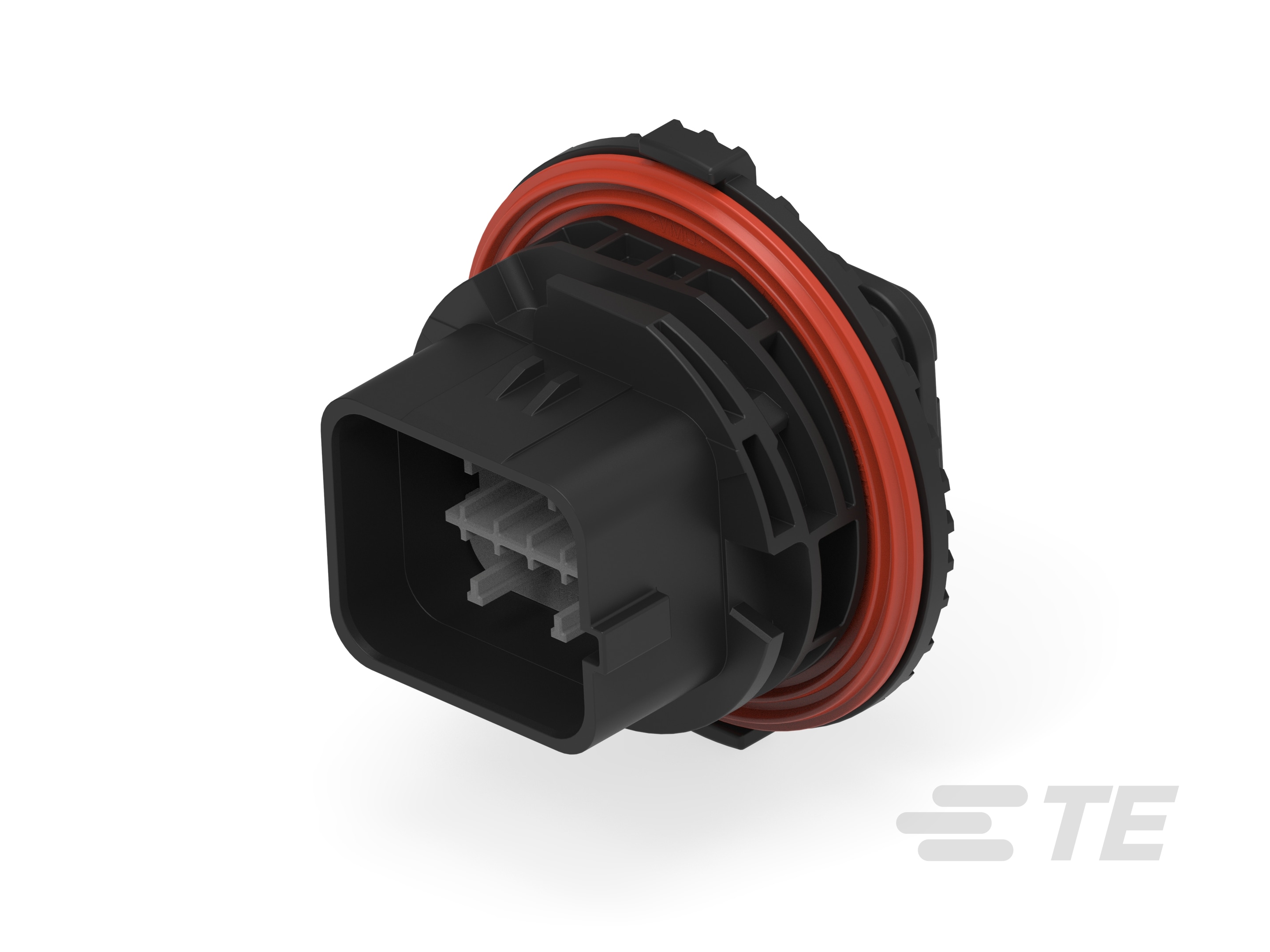
Product Features
-
Nominal Voltage Architecture (V): 12 | 24 | 48 | 60
-
Connector & Housing Type : Housing for Male Terminals | Receptacle
-
Number of Positions : 18 | 20 | 26 | 36 | 38 | 48
-
Sealable : Yes
-
Operating Temperature Range : -40 – 125 °C [ -40 – 257 °F ]

At a Glance
NTSEAL Pin Housings for Male Terminals.
- Positions: 18, 20, 26, 36, 38, 48; hybrid layouts mix size 12, 16, and 20 contacts for power and signal.
- Sealing: IP67, IP68, IP6K9K with backshell.
- Temp: -40º to 125ºC (-40° to 257°F)
- Environment: engine level vibration.
- Docs: Product spec; Application spec
Key Benefits:
NTSEAL Pin Housings for Male Terminals.
- Ready for harsh duty
Sealing levels up to IP67, IP68 and IP6K9K with backshell help protect pins against water, dust and high pressure washdown. This can help reduce field failures and rework costs.
- Built for heat and vibration
Operates from -40º to 125ºC (-40° to 257°F) and is designed for engine level vibration. Use in under hood areas without constant redesign.
- High density in a small package
Choose 18, 20, 26, 36, 38 or 48 positions to bring more signals into one sealed interface and cut connector count.
- Hybrid power and signal in one place
Mix DEUTSCH contacts size 12, size 16 and size 20 to carry 7.5 A, 13 A and 25 A at 125ºC in one housing. This can simplify harness routing.
- Faster, more reliable mating
Higher cavity counts add an integrated locking lever for quick mating and a positive lock feel. Four keying codes with color options help reduce cross mating.
- Assurance features for serviceability
Terminal Position Assurance (TPA) confirms contact is seated, while Connector Position Assurance (CPA) helps prevent accidental unlatch. These features support consistent assembly and field service.
- Panel and bulkhead friendly
Pin housings with flange accept mounting rings for common panel thicknesses, so you can create sealed pass throughs without custom hardware.
- Easier parts planning
Uses the proven DEUTSCH common contact system, which can help consolidate inventory across programs.
Key Features
NTSEAL Pin Housings for Male Terminals.
| Feature | Specification |
|---|---|
| Housing type | NTSEAL receptacle pin housing for male terminals; families in 18, 20, 26, 36, 38 and 48 positions. |
| Contact system | DEUTSCH common contacts, sizes 12, 16 and 20. |
| Sealing performance | IP67, IP68 and IP6K9K with backshell. |
| Operating temperature | -40° to 125°C. (-40° to 257°F) |
| Current capability | 7.5 A, 13 A and 25 A at 125° C depending on contact size. |
| Operating voltage | 12 V and 24 V systems. |
| Mating assist | Integrated locking lever on higher cavity count variants for smoother mating. |
| Anti mismatch | Four keying codes with color options. |
| Assembly aids | Terminal Position Assurance (TPA) and optional Connector Position Assurance (CPA). |
| Panel mounting | Pin housings with flange support mounting rings for 1.5, 3.0, 3.5 and 4.0 mm panels. |
| Materials | Housing, CPA and TPA in PBT. |
| Accessories | Backshells, sealing plugs, caps and mounting clips available. |
Real World Applications
NTSEAL Pin Housings for Male Terminals.
- Engine, E motor and Transmission
ECU and sensor breakouts, gearbox control, inverter and motor position feedback where sealed bulkhead pass through is needed. The flange plus mounting ring supports panel integration near the powertrain. - Chassis and Cabin
ABS and brake control, steering systems, HVAC modules, instrument panel harness junctions. Use coding and color options to simplify service in tight cabin spaces.
- Smart and Connected Bus
Telematics, gateway and camera harnesses. High density options help combine data and low current power in one interface for body electronics. - Charging and Battery
Low voltage harnessing for on board chargers, battery management controllers and auxiliary power. Temperature and sealing performance support exposure near cooling airflow and splash zones. - Power Distribution and Energy Management
Fuse and relay boxes, power distribution modules and hybrid nodes that need size 12 positions for higher current with size 16 and size 20 signal lines in the same connector. - After treatment and Bulkhead Mount
Dosing control units, sensors and heater circuits mounted on frames or body panels where tool free panel installation and sealing are valuable. - Agriculture, Construction, Truck and Bus
Use across harsh duty vehicles that demand rugged sealed interfaces for long service life.

 e
e
 e
e
 e
e
 e
e
Frequently Asked Questions
NTSEAL Pin Housings for Male Terminals
Q: What is an NTSEAL housing for male terminals, and how does it differ from the plug version?
A: In the NTSEAL connector family, the housing for male terminals is the pin housing sometimes called the receptacle in the catalog. It mates with the plug that carries socket contacts. Pin housings are offered with or without a flange for panel mount and are color coded and keyed to avoid cross mating. See the position tables and coding examples on pages 3 through 8 of the datasheet.
Q: What ingress protection do these housings achieve in the field?
A: When used with the matching backshell, NTSEAL achieves IP67, IP68, and IP6K9K for dust, immersion, and high pressure spray. This rating supports under hood, chassis, and washdown environments..
Q: What temperature and vibration performance should I design for?
A: Operating temperature is 40° to 125°C (-40° – 257°F). The series is described as suitable for engine level vibrations, which is why it is used around engines, e motors, transmissions, and frames.
Q: What system voltage and contact current does the housing support?
A: NTSEAL is used in 12 volt and 24 volt vehicle systems. Contact current depends on contact size at 125°C: about 7.5 A for size 20, 13 A for size 16, and 25 A for size 12.
Q: Which DEUTSCH contacts fit these male terminal housings and what wire sizes can I use?
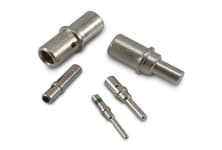
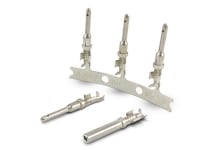
A: NTSEAL uses the DEUTSCH common contact system in sizes 20, 16, and 12. Typical wire ranges are 0.5 to 1.5 mm² for size 20, 1.0 to 2.5 mm² for size 16, and 2.0 to 6.0 mm² for size 12.
Q: What position counts are available for male terminal housings?
A: The family covers 18, 20, 26, 36, 38, and 48 positions. Contact mixes vary by shell size, letting you combine power and signal in one connector. See pages 3 through 8 of the datasheet for pin housing options by size.
Q: Do the housings include safeguards for contact retention and latch security?
A: Yes. TPA is a terminal position assurance feature that helps confirm each crimped contact is fully seated. CPA is a connector position assurance feature that helps keep the latch in the locked state after mating. Both are integrated into the system. See the feature list on page 1 of the datasheet.
Q: Is there an assisted mating option for higher pin counts?
A: The 26, 36, 38, and 48 position connectors include an integrated locking lever to support mating and speed assembly.
Q: What panel mount choices exist for pin housings, and how do I pick the right ring?
A: Pin housings are available with a flange for panel mount or without a flange for in line use. Mounting rings are color coded for common panel thickness values, for example 1.5, 3.0, 3.5, and 4.0 mm. See the mounting ring tables near each shell size in the datasheet.
Q: Which backshells and accessories pair with male terminal housings?
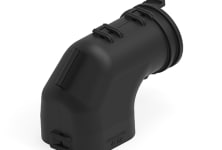
A: Backshells are offered in one hundred eighty degree and ninety degree outlets. The ninety degree can rotate a full three hundred sixty degrees when used with the 180° base. Accessories include sealing plugs, sealed caps, and mounting clips.
Q: What coding options prevent mis mating during service?
A: Four coding options labeled A, B, C, and D are offered. They are also color coded (black, grey, green, blue) to help technicians match pairs on the line and in the field.
Q: What materials are used for the housing and lock features?
A: The housing, CPA, and TPA are made of PBT. This choice balances strength, stability, and chemical resistance for transportation environments.
Q: Where do I find crimping and assembly guidance or test details?
A: Use the Application Specification 114-32209 for termination and assembly practices and the Product Specification 108-101662 for performance details.
Q: How do I decide which contact mix to use for my harness area, for example engine bay versus battery and charging?
A: Match the current and wire size first, then the position count and IP rating needed for that area. For example, select size 12 cavities when you need contact currents around 25A at 125°C and plan for IP6K9K where high pressure spray occurs.
READ MORE FREQUENTLY ASKED QUESTIONS
Please review product documents or contact us for the latest agency approval information.
Product Type Features
-
Mixed & Hybrid Connector No | Yes
-
Connector Shape Rectangular
-
Connector & Housing Type Housing for Male Terminals | Receptacle
-
Sealable Yes
-
Primary Locking Feature Integrated in Housing | Locking Lance
-
Connector System Cable-to-Cable | Wire-to-Wire
-
Connector & Contact Terminates To Wire & Cable
Configuration Features
-
Number of Positions 18 | 20 | 26 | 36 | 38 | 48
-
Number of Rows 4 | 5 | 6 | 7
Electrical Characteristics
-
Nominal Voltage Architecture (V) 12 | 24 | 48 | 60
Body Features
-
Primary Product Color Black | Blue | Gray | Green
-
Connector & Keying Code A | B | C | D
Contact Features
-
Contact Type Pin | Socket
-
Contact Size Size 12 | Size 16 | Size 20
-
Mating Pin Diameter (mm) 1 | 1.55 | 2.37
-
Mating Pin Diameter (in) .039 | .061 | .093
-
Contact Current Rating (Max) (A) 13 | 25
Mechanical Attachment
-
Mating Alignment With
-
Mating Alignment Type Keyed
-
Connector Mounting Type Free-Hanging (In-Line)
Housing Features
-
Centerline (Pitch) (mm) 3.5 | 3.53
-
Centerline (Pitch) (in) .138 | .14
Usage Conditions
-
Operating Temperature Range -40 – 125 °C [ -40 – 257 °F ]
-
Operating Temperature (Max) 125 °C [ 257 °F ]
Operation/Application
-
Circuit Application Power | Power & Signal
Other
-
Connector Position Assurance Capable No | Yes