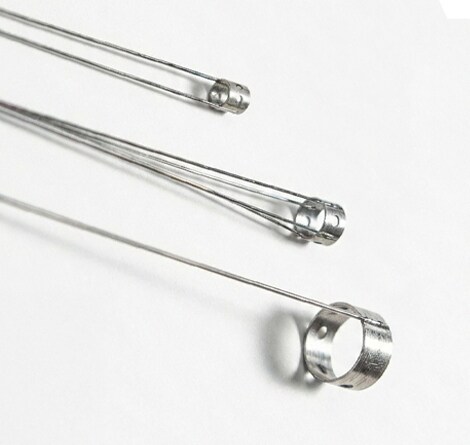
Pull Wires for Steerable Devices
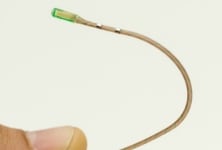
TE Connectivity offers high-precision pull wire assemblies designed for steerable catheters and minimally invasive medical devices. Built for tight tolerances, reliable deflection, and robust mechanical performance, TE’s pull-wire solutions help engineers overcome challenges in catheter steerability, fatigue resistance, and scalable manufacturing.
In a wide range of interventional procedures — from structural heart repair and neurovascular therapy to electrophysiology, peripheral vascular treatment, and advanced endoscopy — steerable catheters must precisely navigate highly tortuous, narrow, and fragile pathways within the body. TE’s Pull Wire Assemblies provide the precise control, reliable performance, and delicate steering engineers need to help these catheters reach target sites safely and effectively.
About our Pull Wire Assemblies
Features & Benefits
Pull Wire Assemblies
- Sizes and materials: we have off-the shelf pull wire assemblies available in 8 sizes, ranging from 6 Fr to 17 Fr, and 1, 2 or 4 pull wires. Custom pull wire assemblies are available in a variety of raw materials. We build custom devices up to 36 Fr and frequently produce assemblies in the 15 - 25 Fr range.
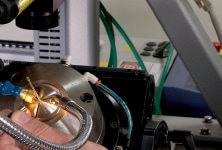
- Quality: High performance, laser-welded, tensile-tested pull wire assemblies that are optimized for your steerable catheter development projects. This includes the capability to provide certificate of conformance (COC) for critical to quality (CTQ) dimensions and specifications.
- Technology expertise: Decades of experience in laser welding, cutting, and processing, as well as designing and manufacturing wire-based delivery systems, guidewires, components and tooling. This includes custom laser cutting, cleaning, polishing and surface treatment.
- Scalability: Design, rapid prototyping, and manufacturing capabilities that enable us to quickly produce and scale custom solutions.
- Next-level service: Expertise and resources that enable us to assist at key stage of the catheter product development process.
The problem
Precise steerability in minimally invasive devices
Engineers designing these steerable catheters face multiple challenges:
- Achieving reliable, repeatable deflection and control of the catheter tip with minimal backlash or hysteresis.
- Ensuring mechanical strength and fatigue resistance in extremely thin (small-diameter) components.
- Meeting stringent dimensional tolerances and critical-to-quality (CTQ) specifications to ensure device safety and performance consistency.
- Allowing rapid prototyping and design iteration, while still supporting scalable, high-volume manufacturing.
- Supporting a range of device sizes and configurations — from small neurovascular catheters to larger structural-heart or vascular applications — often requiring custom solutions.
TE’s solution
Purpose-built Pull Wire Assemblies engineered for performance and scalability
Key design capabilities and benefits from TE:
- Wide range of sizes and configurations: TE offers off-the-shelf assemblies in 8 standard sizes, from 6 Fr to 17 Fr, with 1, 2, or 4 pull-wires. For nonstandard requirements, TE can build custom assemblies — in a variety of raw materials — up to 36 Fr, with frequent production in the 15–25 Fr range.
- Precision, laser-welded quality: Each assembly is manufactured with advanced laser-welding technology, then tensile-tested and validated to meet CTQ dimensions and specifications. This provides structural integrity, mechanical reliability, and reproducible performance — essential when the assembly must repeatedly flex and steer inside the body.
- Deep materials and manufacturing expertise: With decades of experience in laser welding, cutting, and processing wire-based delivery systems (guidewires, catheter components, tooling), TE supports custom laser cutting, cleaning, polishing, surface treatment, and fine-tuned processing. This expertise enables engineers to push boundaries on catheter design without sacrificing manufacturability.
- Scalability from prototype to production: TE’s workflow supports rapid prototyping and design iteration — helping device developers refine steerability, strength, and manufacturability early — and then easily scale to high-volume manufacturing when the design is locked in.
- End-to-end support for catheter development: TE’s services extend beyond just providing the pull-wire component. Our support includes design feedback, process development, and manufacturing process validation — aiding engineers at the key stages of the catheter development lifecycle.
Why this matters in engineering terms
- Achieve consistent and predictable steering behavior, with minimal variability across lots.
- Maintain structural reliability and fatigue resistance, crucial for repeated use (or repeated insertion cycles) in vivo.
- Reduce design-to-manufacturing lead time, thanks to off-the-shelf options plus custom-engineering services.
- Simplify regulatory compliance and quality assurance: The availability of a certificate-of-conformance (CoC) for CTQ dimensions helps support documentation and verification needed for medical-device approval.
- Focus design efforts on the catheter’s functional aspects (e.g., tip shape, lumen routing, control handle) — rather than reinventing the low-level pull-wire mechanics from scratch.

Materials & Specifications
Materials
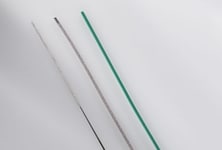
- Pull Wires: High-strength stainless steel or specialty alloys for durability and fatigue resistance.
- Joints and Connections: Precision laser-welded for consistent mechanical performance.
Specifications
- Sizes: Standard assemblies from 6 Fr to 17 Fr; custom assemblies up to 36 Fr.
- Wire Count: 1, 2, or 4 pull wires per assembly, tailored to device requirements.
- Dimensional Tolerances: Tight tolerances to ensure reliable, repeatable catheter steering.
- Mechanical Performance: Tested for tensile strength, fatigue resistance, and consistent tip deflection.
- Customization: Supports off-the-shelf solutions and fully custom designs for a range of minimally invasive procedures.
Medical Device Solutions Supported
Solutions
- Steerable Catheters: Precise control for neurovascular, structural heart, and peripheral vascular procedures.
- Electrophysiology Devices: Accurate navigation for ablation and mapping catheters.
- Endoscopic Devices: Enhanced maneuverability in narrow and tortuous anatomical pathways.
- Interventional Tools: Support for device prototypes requiring tight tolerances and predictable mechanical response.
- Rapid Prototyping & Production: Scalable solutions from initial design to high-volume manufacturing.
Technical Resources
CAD-Files
- CAD File - Welded Assembly 6 Fr Pull Ring
- CAD File - Welded Assembly 7 Fr Pull Ring
- CAD File - Welded Assembly 8 Fr Pull Ring
- CAD File - Welded Assembly 9 Fr Pull Ring
- CAD File - Welded Assembly 10 Fr Pull Ring
- CAD File - Welded Assembly 12 Fr Pull Ring
- CAD File - Welded Assembly 16 Fr Pull Ring
- CAD File - Welded Assembly 17 Fr Pull Ring
 e
e
 e
e
 e
e
 e
e
 e
e
 e
e
 e
e
 e
e
Manufacturing Locations
 e
e
Frequently Asked Questions
FAQs
Q: What types of pull wire configurations do you support (single, dual, 4-way, etc.)?
A: TE supports single, dual, and 4-way pull wire assemblies, enabling precise uni- and bi-directional steering. We customize routing and termination based on catheter geometry and control handle integration.
Q: What materials are available for pull wires (e.g., stainless steel, nitinol)?
A: We offer 304V stainless steel, nitinol, and MP35N pull wires — each selected for tensile strength, fatigue resistance, and kink tolerance. Material choice depends on stroke length, routing, and force transfer needs.
Q: What coatings are available (e.g., PTFE, hydrophilic, polymer jacket)?
A: Pull wires can be supplied with PTFE, FEP, or polyimide coatings, reducing friction during actuation. We also offer jacketed pull wires to insulate from other components or lumens.
Q: Do you provide both prototyping and production for pull wire systems?
A: Yes — we offer quick-turn prototyping, pilot builds, and high-volume production, enabling a smooth transition from development to commercialization.