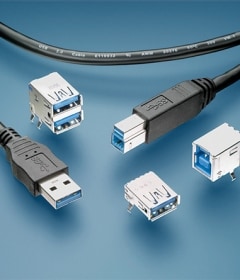
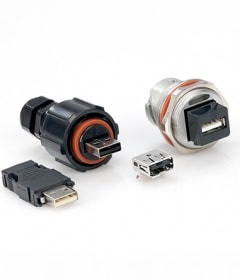
TE Connectivity has been at the forefront of every major USB evolution. From helping to pioneer the first USB 1.0 connectors in the mid-1990s to delivering cutting-edge USB4 Gen 3 solutions today, TE Connectivity has been at the forefront of every major USB evolution. As a founding member of the USB-IF, TE has consistently participated in the industry’s transition to faster data transfer speeds and more powerful charge capabilities, while supporting innovations like reversible USB Type-C interfaces and enhanced power delivery capabilities up to 240 W. Our comprehensive portfolio - from standard Type-A and Type-B to ruggedized, waterproof USB-C connectors — empowers designers with strong reliability, scalability, and flexibility for applications spanning consumer electronics, industrial automation, and next-generation IoT ecosystems.
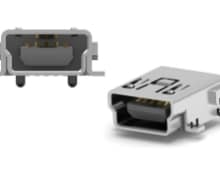
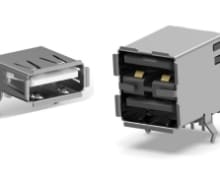
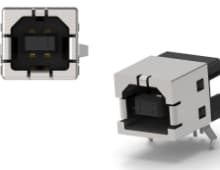
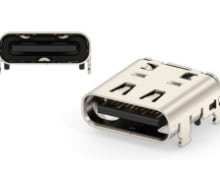


USB Connectors
Product Features:
- Broad family of board mount receptacles, in various orientations and PCB mounting styles
- Hot pluggable, permitting attaching or detaching peripherals without power downtime or reboot
- Consolidates serial parallel, keyboards, mice, and game ports
- Compatible with asynchronous and isochronous data transfer methods
- Polarized for proper orientation
- Allows for charging
- Cable mount overmold plug kits for all USB sizes and types
- Plug-and-Play capability
Frequently Asked Questions
Understanding USB Connectors Types
Q: What are the different types of USB connectors available?
TE Connectivity provides a broad range of standard USB connector families — including USB Type‑A, Type‑B, Mini‑USB, Micro‑USB, and USB Type‑C — supporting USB 2.0 through USB4 standards. This product selection allows engineers to select an interface that aligns with their system bandwidth, mechanical constraints, and lifecycle expectations.
Q: What are differences in USB connector types?
TE offers diverse mounting styles and mechanical options within each family to
address design constraints.
- Type‑A / Type-B: Simple, familiar, cost‑effective; larger footprint; non‑reversible.
- Mini‑USB: More compact than Type‑A/B; largely legacy.
- Micro‑USB: Small and low‑profile; more mechanically delicate than USB Type‑C.
- USB Type‑C: Reversible, supports high‑speed data and power delivery;
higher pin‑count and PCB routing complexity.
Q: Which USB connectors support fast charging?
USB Type‑C connectors that implement USB Power Delivery (PD)
support the widest range of power levels. TE’s USB Type‑C components are
designed for currents up to 5A depending on the specific product series.
Standard and Micro‑USB connectors also carry power but at lower current levels
suitable for mainstream charging.
Q: How should I choose the right USB connector for my device?
Key considerations include:
- Required data rate and protocol
- Power‑delivery needs
- Size and board‑stacking constraints
- Environmental exposure
- Desired user experience (e.g., reversibility)
TE’s USB families offer multiple mechanical formats so designers can select a connector that aligns with both electrical and mechanical specifications.
Q: How do different USB connectors compare in terms of charging efficiency?
Charging performance depends mainly on system‑level power‑path design. TE USB connectors contribute through appropriate current ratings, contact geometry, and material selection that help manage resistive losses. USB Type‑C connectors in TE’s portfolio support higher current levels (per USB‑IF specifications), suitable for USB Power Delivery applications. Micro-USB, Mini USB, and Type‑A/B connectors support lower current levels aligned to USB 2.0/3.x specifications. Across families, staying within TE’s published electrical ratings and using TE’s validated contact interfaces helps limit unwanted heating and maintain stable power transfer.
Q: Which USB connectors support the highest power delivery standards?
TE’s USB Type‑C connectors support modern USB‑PD profiles
(up to the levels defined by USB 3.x/USB4 frameworks). Certain variants,
including sealed IPX8 options, maintain PD capability while adding
environmental protection. Other TE USB families (Micro, Mini, Type‑A/B) support power within their respective USB versions but not the expanded PD envelope offered by USB Type‑C.
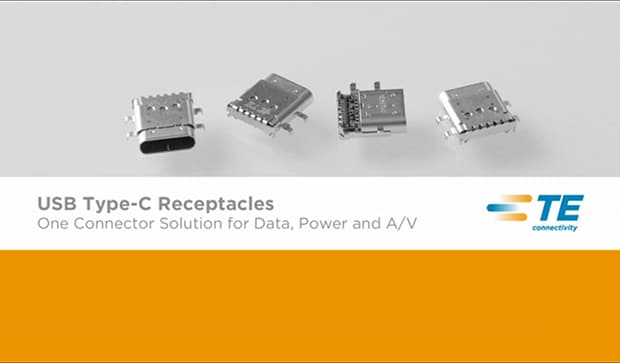
The USB Type-C receptacle is your one-connector solution for data, power, and A/V applications. It has a slim profile for use in mobile devices, yet it is robust enough for industrial applications.
-
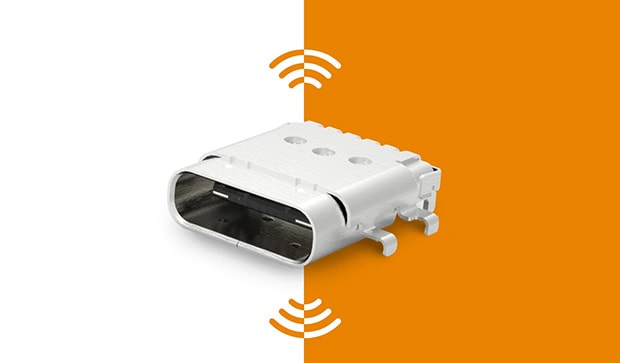
USB Type-C Connectors for Small and Home Appliances (English)
-
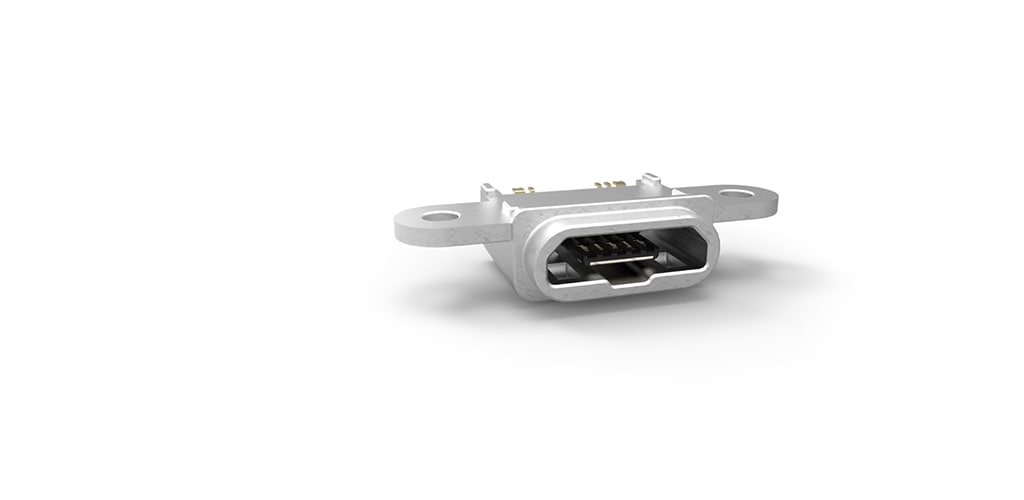
Waterproof Micro USB 2.0 Connector (English)
-

USB 3.0 Connector Solutions (English)
Select Applications:
USB Connectors
Type-A
- Data transfer between host and device
- Connecting peripherals:
- Keyboards
- Mice
- Printers
- Flash drives
- External hard drives
- Game controllers
- Charging and data transfer:
- Smartphones
- Tablets
- Cameras
Type B
- Printers and scanners
- Audio interfaces
- External hard drives
- Industrial and lab equipment
- USB hubs (device-side)
Mini USB
- Digital cameras
- MP3 players
- GPS devices
- External hard drives
- Game controllers
- Development boards
Micro USB
- Smartphones and tablets
- (especially Android devices prior to USB Type-C)
- Power banks, headphones and
- speakers
- Digital cameras
- External hard drives
- Development boards
USB Type-C
- High speed signal version
- Laptops & ultrabooks
- External SSDs & NVMe drives
- 4K/8K monitors & docking
- stations
- VR/AR headsets & gaming
- consoles
- High-performance industrial
- automation
- Low speed signal version
- Smartphones & tablets
- Printers & scanners
- IoT devices & sensors
- Basic industrial control systems
- Charge-Only version
- Wireless earbuds & accessories
- Power banks & charging docks
- Hubs and Adapters
- Portable medical devices