Connecting the Networks Everything Depends On
Harden today's grid. Power the grid of tomorrow.
Connection, protection and monitoring solutions that strengthen underground, substation and overhead networks to meet growing energy demands, withstand extreme weather and perform reliably for decades to come.
80M km
of grid to add or replace worldwide by 2040, equal to all grids in the world today1
$100B
a year: the global cost of economically damaging power outages1
14%
shorter annual outage durations associated with every 10% more miles underground (U.S.)2
1.5M
more grid workers needed worldwide by 20303
Grid Hardening Starts With What You Already Run
Your network is carrying more load than it was designed for, through more extreme weather, with fewer experienced hands in the field. Outages start at a single point: a cable joint, a termination, a pole-top connection, an unprotected bushing. And they last as long as it takes to find the fault.
Hardening means strengthening each of those points with solutions your crews can install quickly and consistently, and seeing faults sooner when they happen. That is where we work, connection by connection, from the cable in the ground to the line on the pole.
Install easier. Perform smarter. Run longer.
Explore by Application
Choose where you are working to explore our solutions for that part of the grid and download its line card.
Connections Built to Last as Long as the Cable.
Joints, terminations and separable connectors in heat shrink and cold applied technologies, for IEC and IEEE networks up to 245 kV. Plus the fault indication and voltage detection that show where a fault is before you dig.
Download the Underground Line Card (PDF)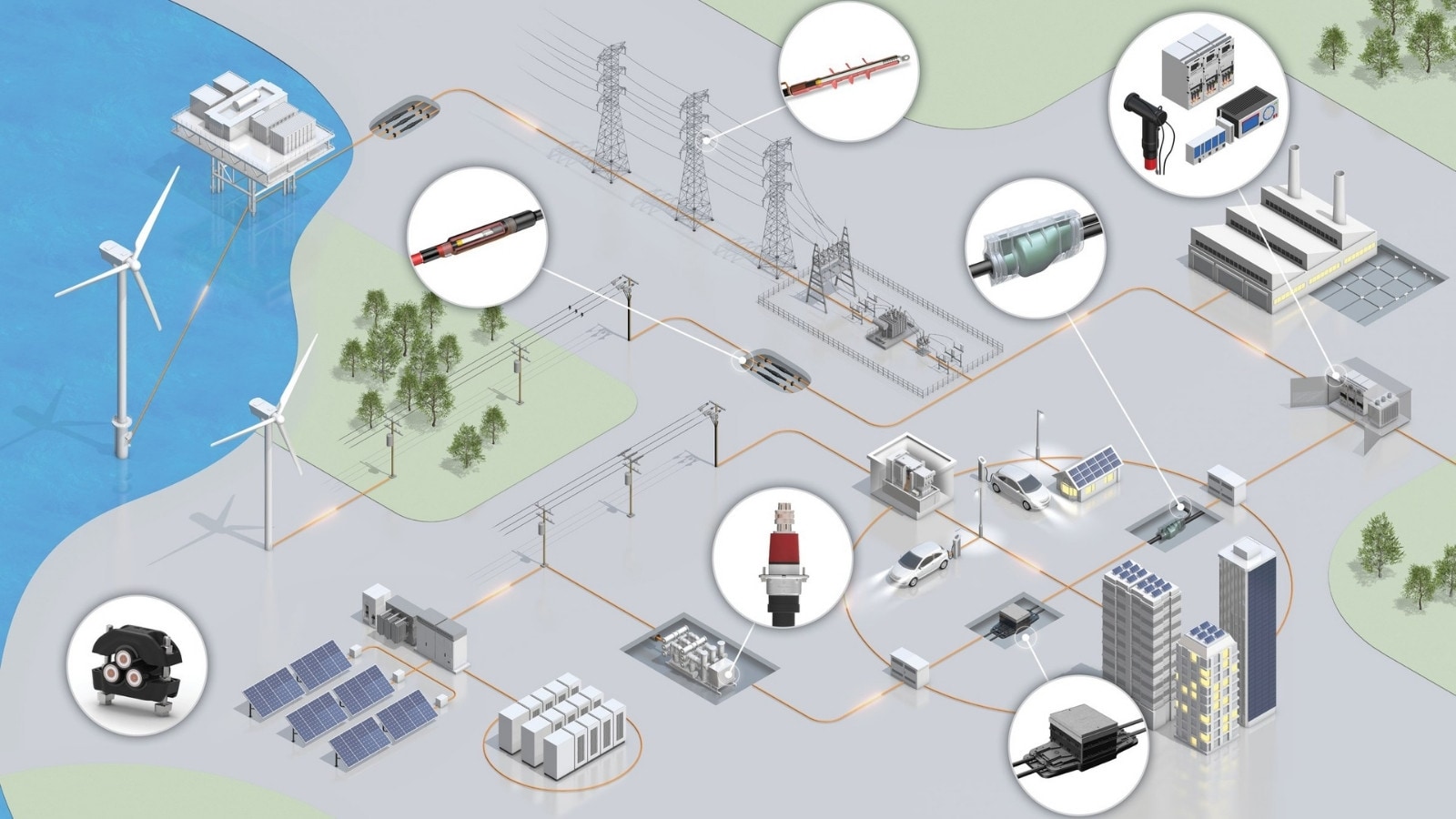
Protect the Node Everything Else Depends On.
Connectors, surge arresters up to 550 kV, separable connectors for switchgear, grounding and lightning protection, and covers that keep wildlife off live parts.
Download the Substation Line Card (PDF)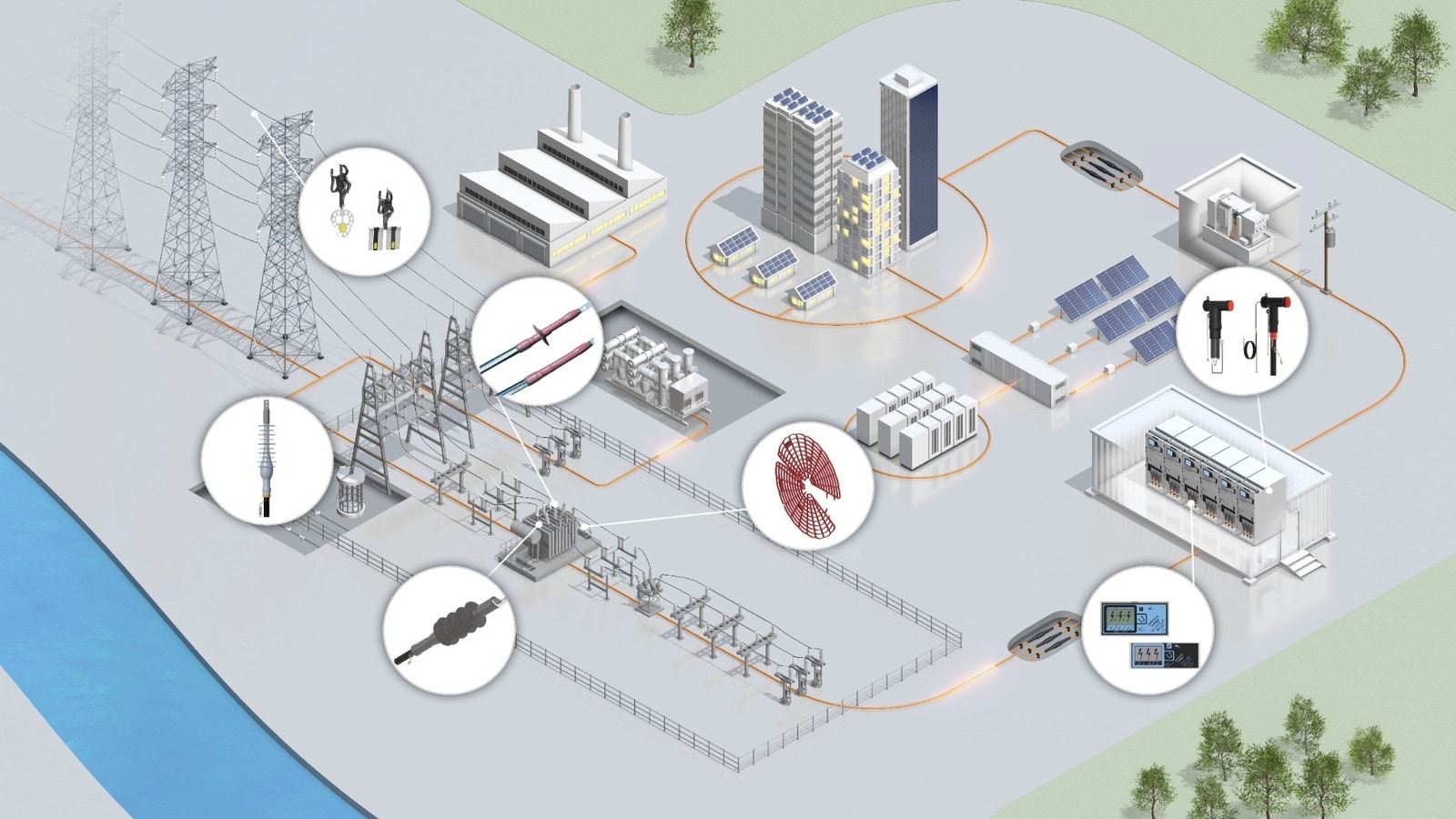
Strengthen the Line Where the Weather Hits.
Wedge connectors, insulators, line surge arresters, wildlife protection and fault indicators, from low-voltage aerial bundled cable to high-voltage transmission.
Download the Overhead Line Card (PDF)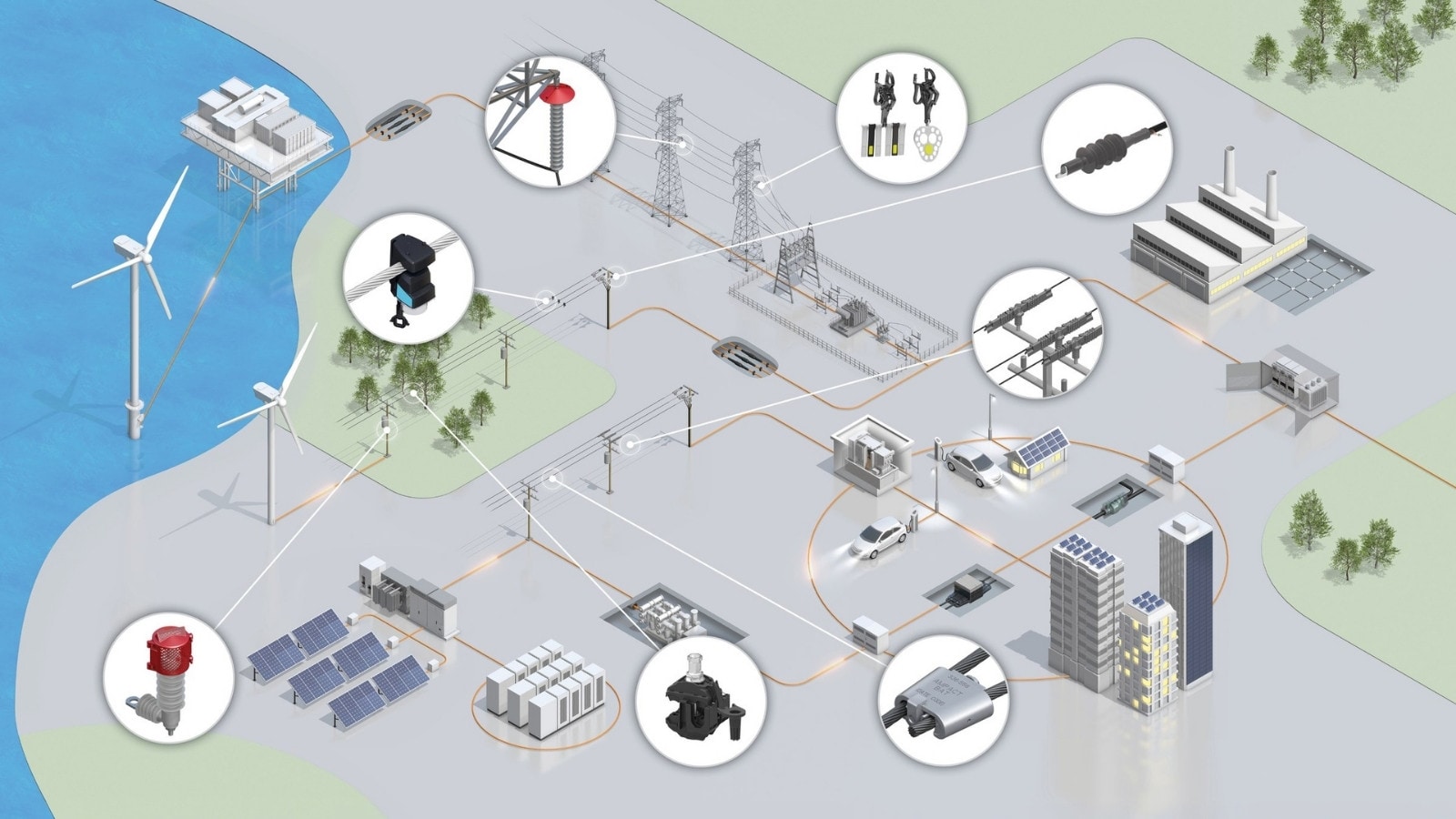
See Faults Sooner. Prepare for Storms. Safeguard Assets.
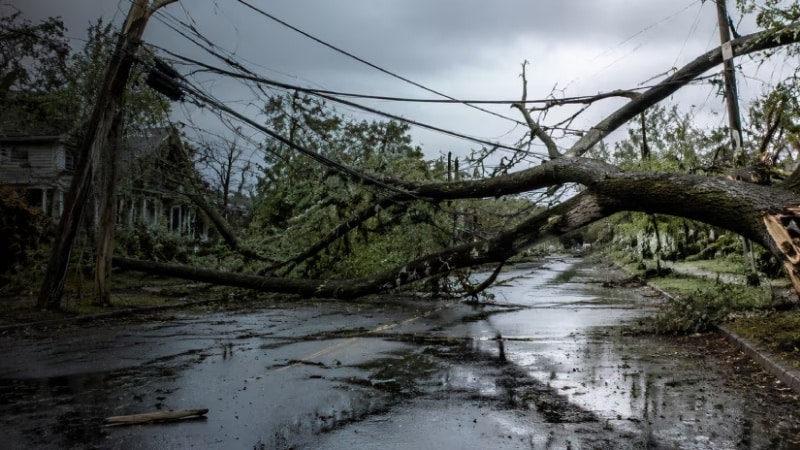
Storm Preparedness & Grid Resilience
Prepare before the storm and restore faster after it.
Explore Storm Preparedness
Wildlife & Grid Protection
Keep animals off live equipment with covers, guards and diverters engineered to keep insulating outdoors.
Explore Wildlife ProtectionNearly 70
years of Raychem heritage in energy, since 19574
1M+
Kries voltage detecting systems installed worldwide4
40+
years of field service without maintenance for our heat shrink technology4
130+
countries where we partner with customers6
We Are the Brands You Rely On.
You already know our names. Raychem, Richards, Harger, Kries, AMPACT and the brands beside them have been part of the grid around the world for decades. Today they work as one portfolio, from the cable joint to the substation ground grid to the fault indicator on the line, backed by one engineering team.
Raychem
The pioneer of heat shrink technology, now with cold applied and separable connector ranges for joints, terminations and connections from low to high voltage.
Explore Power Cable Accessories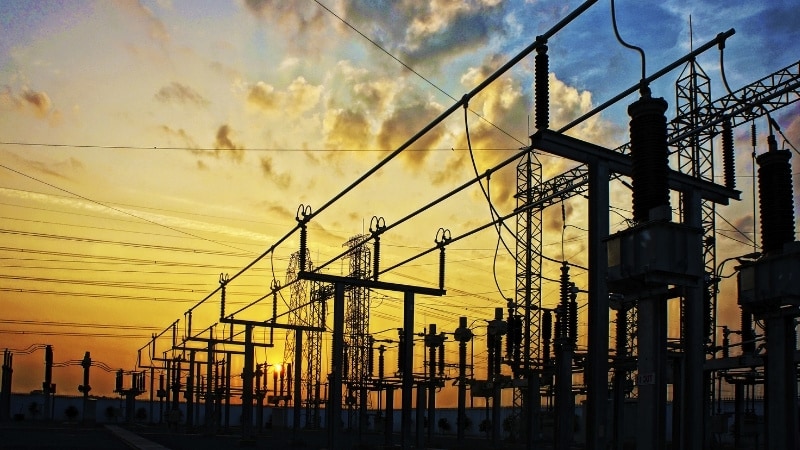
Richards
Medium-voltage cold shrink cable accessories and network protectors for underground distribution, with nearly 80 years serving utilities.
Visit Richards
Harger
65+ years of grounding, bonding, exothermic welding and lightning protection, manufactured in Illinois and North Carolina.
Visit Harger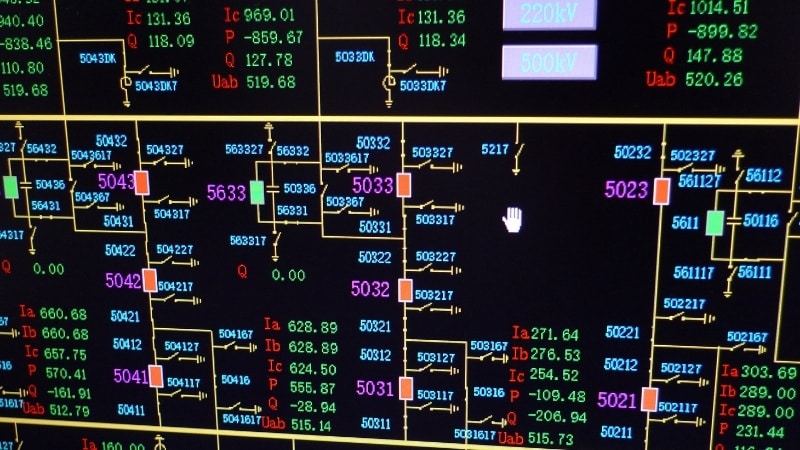
Kries
Fault indicators, voltage detecting systems and feeder control units that show operators where a fault is, on overhead and underground lines.
Explore Smart Grid SolutionsAMPACT
Wedge pressure technology for reliable overhead taps and in-line connections.
Explore Wedge ConnectorsSIMEL
Insulation piercing and mechanical connectors for low-voltage aerial bundled cable and underground networks.
Explore ConnectorsBowthorpe EMP
Surge arresters and insulators that protect lines and substation equipment from lightning and switching surges.
Explore Arresters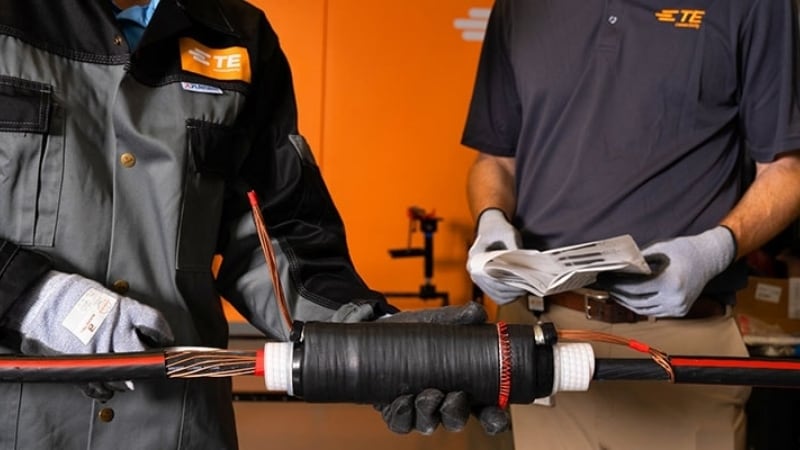
More than half of MV cable accessory failures start at installation.1
We train 2,500 installers a year at our training centers in Europe and North America.
Learn From the Field and Our Experts
Case studies, trend articles, white papers, webinars, and application and installation videos, from real utility projects and the engineers behind them.

Transmission & Distribution, Answered
From grid basics to grid hardening, monitoring and training: straight answers to the questions utilities ask us most.
Transmission moves bulk power at high and extra-high voltage over long distances, from power plants to substations. Distribution takes it from those substations to homes and businesses at medium voltage, then low voltage. The substation is where the two meet and voltage is stepped down. We support all three: overhead lines, underground cable networks and substations.
It depends on the standard. In IEEE practice, medium voltage usually means above 1 kV up to 35 kV. In IEC markets the range commonly extends to 52 kV. Low voltage is below 1 kV in both. That is why we design and test to both IEEE and IEC: our separable connectors, for example, cover IEC, IEEE and GB/T networks.
Grid hardening means physically strengthening transmission and distribution assets so they are less likely to fail under stress from weather, wildlife, vegetation, lightning, age and rising load. Typical measures include upgraded cable joints and terminations, stronger connectors and insulation, wildlife protection, surge arresters and grounding, targeted undergrounding, and fault monitoring that speeds up restoration. Watch Powering Resilience: Hardening Strategies for Evolving Grids.
Hardening reduces the chance of damage. Resilience is the network's ability to withstand, adapt to and recover from major events, so it also covers monitoring, automation and restoration. Reliability is the everyday outcome, measured with IEEE 1366 indices: SAIDI (average outage minutes per customer) and SAIFI (average interruptions per customer). In 2024, U.S. customers averaged 11 hours without power, with major events behind 80% of those hours.9
Weather drives most major outages: in the U.S., 80% of major outages from 2000 to 2023 were weather-related.7 Day to day, trees, equipment failures and squirrels were the three most reported causes of sustained outages in 2023 public power data, with animals behind about 19% overall.8 Worldwide, wildlife outages cost electricity suppliers an estimated USD 10 billion a year.10 See Storm Preparedness and Wildlife & Grid Protection.
It depends on the route. Underground cable is shielded from wind, ice, trees and most wildlife, which makes it attractive in wildfire areas, dense cities and storm-exposed corridors. It costs considerably more to build than overhead line, and faults can take longer to locate and repair. A cable system is also only as reliable as its joints and terminations, so accessory choice, installer training and fault indication matter as much as the cable. See underground solutions.
Cover or isolate the energized parts animals touch, and give birds space. That means covers and guards on bushings, cutouts, arresters and jumpers, plus barriers that keep climbing animals out of substations. Covers need materials that resist tracking, UV and heat so they keep insulating for years. On lines, flight diverters reduce collisions, and APLIC's Suggested Practices guide spacing for raptors. Mount Horeb Utilities cut the impact of wildlife outages by 84.5% in a year. Read the wildlife outages white paper.
A substation grounding system keeps step and touch voltages within safe limits during a fault and carries fault and lightning current safely to earth. IEEE 80 is the main design guide in IEEE markets; IEC markets typically follow IEC 61936-1 and EN 50522. Connections should stay sound for decades, which is why exothermic welds are widely used. See Harger grounding and lightning protection and our substation solutions.
A faulted circuit indicator (FCI), called a fault passage indicator (FPI) in IEC markets, detects fault current on an overhead or underground line and shows crews which section the fault is in, so they patrol less and restore healthy sections sooner. Connected to SCADA, FCIs feed fault location, isolation and service restoration (FLISR). In a U.S. DOE study of 266 FLISR operations, FLISR cut customers interrupted by up to 45%.11 See Kries fault indicators and watch A Roadmap to Digitalizing your Power Grid.
Before the season, harden the most exposed feeders, stage materials and train crews on fast-install connectors and repair solutions. During the event, use fault indicators and remote monitoring to see where the damage is. Afterwards, restore with temporary connections where needed, such as the First Aid connector, then make permanent repairs that leave the line stronger than before. See Storm Preparedness & Grid Resilience and watch When Nature Strikes.
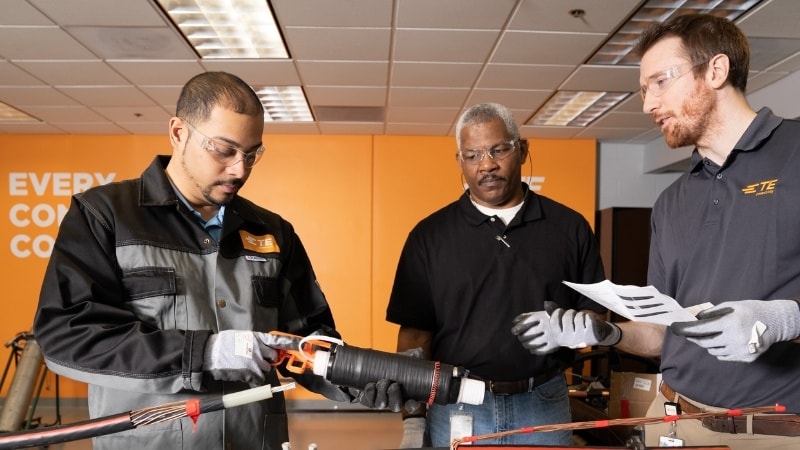
Training is product-specific and hands-on, and manufacturers usually run their own courses with periodic recertification. It matters: more than half of medium-voltage cable accessory failures are caused by installation errors,5 and the global grid workforce must grow by at least 1.5 million people by 2030.3 We train 2,500 installers a year at our training centers in Europe and North America. See installation training and, in the U.S. and Canada, MVPower certification.
Our T&D portfolio brings together Raychem cable accessories and insulation, Richards MV cold shrink accessories and network protectors, Harger grounding and lightning protection, Kries grid monitoring, AMPACT overhead connectors, SIMEL and UTILUX connectors and lugs, and Bowthorpe EMP surge arresters. Together they cover underground, substation and overhead networks, with one engineering team behind them.
Sources
- IEA, Electricity Grids and Secure Energy Transitions, 2023.
- U.S. Department of Energy, Grid Deployment Office (prepared by Lawrence Berkeley National Laboratory), Undergrounding Transmission and Distribution Lines: Resilience Investment Guide, September 2024 (citing Larsen, Stanford University, 2016).
- IEA, Building the Future Transmission Grid, February 2025.
- TE Connectivity internal data (Raychem founded 1957; Kries voltage detecting systems installed; heat shrink field service record).
- TE Connectivity, Electrical Installation Training page.
- TE Connectivity, 2025 One Connected World report.
- Climate Central, Weather-Related Power Outages, 2024.
- American Public Power Association, Public Power Reliability Report, 2024 (2023 eReliability Tracker data).
- U.S. Energy Information Administration, Annual Electric Power Industry Report, 2025.
- OECD, Mainstreaming Biodiversity into Renewable Power Infrastructure, 2024.
- U.S. Department of Energy, FLISR, Smart Grid Investment Grant Program report, 2016.
The grid of tomorrow has to be easier to build, smarter to operate and longer to run.
EVERY CONNECTION COUNTS