For more details and information on our Pull Wire Assemblies products and capabilities, visit our product page on te.com or download our brochure. You can also connect with our experts to learn more, get samples and design support.
General
Q: What is a Pull Wire Assembly?
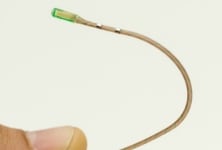
A: A Pull Wire Assembly (sometimes called a Pull Ring Assembly) is a mechanical component used in medical devices to enable manual movement of a component, commonly found in delivery systems for minimally invasive procedures. It provides steerability for the physician to navigate to the desired location within the human body.
Design & Functionality
Q: What types of pull wire configurations do you support (single, dual, 4-way, etc.)?
A: TE supports single, dual, tri-, and 4-way pull wire assemblies, enabling precise uni- and bi-directional steering. We customize routing and termination based on catheter geometry and control handle integration.
Q: What levels of deflection or steerability can your pull wire assemblies achieve?
A: We can support precise and repeatable deflection angles up to 270° or more, depending on catheter design. Deflection range is tuned via shaft stiffness, pull wire length, and anchor point placement.
Q: Can you support bi-directional or multi-directional steering mechanisms?
A: Yes — our assemblies are designed for bi-directional and multi-plane steerability, often used in structural heart delivery systemswhere precision navigation in the vasculature is critical.
Q: What is the typical response time or latency of the pull system under load?
A: Response time is nearly instantaneous. With low-friction coatings and optimized routing, we minimize lag or backlash. Wire tension and shaft design affect actuation smoothness and responsiveness.
Q: How consistent is the deflection angle across repeated cycles?
A: Our assemblies are designed for high repeatability over thousands of cycles, with minimal mechanical hysteresis or drift. Cycletesting data can be provided for reliability assurance.
Materials & Construction
Q: What materials are available for pull wires (e.g., stainless steel, nitinol)?
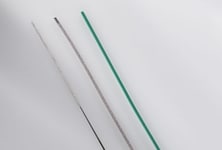
A: We offer 304V stainless steel, nitinol, and MP35N pull wires — each selected for tensile strength, fatigue resistance, and kink tolerance. Material choice depends on stroke length, routing, and force transfer needs.
Q: What coatings are available (e.g., PTFE, hydrophilic, polymer jacket)?
A: Pull wires can be supplied with PTFE, FEP, or polyimide coatings, reducing friction during actuation. We also offer jacketed pull wires to insulate from other components or lumens.
Q: Do you offer torque or stiffness tuning of the pullwire itself?
A: Yes — by adjusting diameter, core material, heat treatment, and coating, we can fine-tune flexibility and tensile performance to match your torque and control handle feedback requirements.
Q: Can you design pull wires to minimize elongation or stretch under tension?
A: Absolutely. We use pre-tensioned wire, high-strength alloys, and precision anchor terminations to minimize elongation. This ensures precise and predictable tip deflection.
Q: Are the materials fatigue-resistant and suitable for long-life deployment systems?
A: Yes — our materials and constructions are chosen to withstand tens of thousands of actuation cycles, especially critical in devices where fatigue or creep could compromise control.
Integration & Customization
Q: Can pull wires be integrated into braided or coiled catheter shafts?
A: Yes — we routinely integrate pull wires into braided, coiled, or multi-durometer polymer shafts. We design full steering subassemblies that match your catheter performance goals.
Q: Do you offer pull rings, laser-welded terminations, or overmolded anchors?
A: Yes — we offer laser-welded rings, crimped or swaged terminations, and overmolded anchors for consistent mechanical strength and compatibility with handle actuation mechanisms.
Q: How are the wires routed — can they be embedded in lumens or along outer layers?
A: Both. Pull wires can be routed inside a dedicated lumens, in polymer tie layers, or along the outer shaft surface, depending on steerability, stiffness, and space constraints.
Q: Can you integrate the pull wire assembly into a handle or actuation system?
A: Yes — we support mechanical integration with control handles, including force translation, return springs, torque knobs, or lock-and-release systems. We also offer assembled sub-units.
Q: What is your capability for tensioning and securing the wire during assembly?
A: We use precision tensioning jigs and document procedures to ensure consistent preload and anchor positioning, which directly impacts deflection precision and durability.
Performance & Reliability
Q: What is the tensile strength and elongation of the pull wire assembly?
A: Tensile strength varies by material and diameter — typically 200–400 ksi for stainless steel. We match elongation specs to ensure low stretch and high control fidelity.
Q: How does it perform under cyclic loading and fatigue testing?
A: Our assemblies are validated to ≥10,000 cycles under a full range of motion with negligible performance degradation. We can perform in-house cyclic bend and actuation testing.
Q: Is there data available on backlash, hysteresis, and return-to-center behaviour?
A: Yes — we can generate actuation response curves, hysteresis plots, and return-to-center validation based on customer design. This ensures high precision control throughout use.
Q: What is the risk of wire fraying, detachment, or creepover time?
A: Our use of laser welding, overmolded anchors, and fatigue-rated materials minimizes these risks. Designs are validated with ageing and life-cycle testing to prevent in-field failures.
Q: Do you offer in-house testing of steering force, break strength, and cycle life?
A: Yes — we perform tensile, cycle life, actuation force, and break strength tests in-house. We can tailor test plans to simulate your device's deployment and handling conditions.
Manufacturing & Quality Control
Q: Do you provide both prototyping and production for pull wire systems?
A: Yes — we offer quick-turn prototyping, pilot builds, and high-volume production, enabling a smooth transition from development commercialization.
Q: Is the pull wire assembly manufactured in ISO13485-certified facilities?
A: Yes — all medical pull wire assemblies are built in ISO 13485-certified, FDA-registered facilities, under strict process control and documentation standards.
Q: Can you support validation (IQ/OQ/PQ) and provide full documentation?
A: Absolutely. We support IQ/OQ/PQ, DHF support, and traceable validation data, tailored to your regulatory submission needs (EUMDR, FDA, PMDA).
Q: What are the tolerances on wire placement, tensioning, and anchor points?
A: Tolerances are tight — typically ±0.1 mm on anchor points, ±5% on preload/tension, and customized per build. These are critical to steerability and repeatability.
Q: Do you provide visual or automated inspection of welds, crimps, or bends?
A: Yes — we use digital microscopy, force testing, and automated visual inspection to validate weld integrity, anchor quality, and routing conformance.
Q: What traceability and lot control do you offer for pull wire components?
A: Full lot-level traceability, including material certs, weld records, and component batch tracking, is standard. We support this through our ISO 13485 QMS.
Learn More
 e
e
 e
e
 e
e
 e
e
 e
e
 e
e
 e
e
 e
e
 e
e