Case Study
The Invisible Layer Powering the Electric Future
In the race to electrify transportation, attention tends to gravitate toward the visible battery packs, sleek dashboards, and fast-charging infrastructure. Yet beneath the polished surfaces and bold promises lies an invisible architecture that determines whether these systems perform safely, reliably, and at scale. It is here, within the unseen layers of insulation and protection, that a quiet but critical innovation is shaping the future: high-voltage heat shrink tubing.
At first glance, heat shrink tubing may appear mundane a polymer sleeve applied to electrical connections. But in the world of high-voltage systems, particularly in electric vehicles and emerging energy ecosystems, it is anything but simple. It is a material science solution operating at the intersection of physics, chemistry, and engineering design, helping increasingly complex electrical infrastructures function under extreme conditions.
A Hidden Backbone of Electrification
Modern electrical systems, whether powering electric vehicles, renewable energy grids, or advanced industrial automation, rely on complex cable networks that must endure heat, voltage stress, moisture, and mechanical strain. Manufacturers require solutions that insulate against electric current, help protect against environmental damage, and are designed to maintain structural integrity over extended service lives.
Heat shrink tubing has emerged as a versatile answer to these challenges. Once heated, the material contracts tightly around cables and components, forming a protective seal that delivers insulation, strain relief, and environmental shielding.
What distinguishes today’s solutions is evolution in material design. Co-extruded and multi-layer heat shrink technologies combine thermoplastics with elastomeric inner layers, allowing the tubing to both conform to irregular surfaces and provide robust external protection. This dual functionality reflects a broader trend in materials science: combining disparate properties into integrated, high-performance systems.
Why High Voltage Changes Everything
The transition to electrification has introduced a fundamental shift from low-voltage systems to environments where voltages exceed traditional thresholds. High voltage, typically defined above 1,000 volts depending on regulatory context, reshapes engineering considerations entirely.
At these elevated levels, risks are amplified. Voltage is no longer just a measure of electrical potential; it becomes a safety factor, capable of overcoming the natural resistance of materials, including the human body. Even small currents, under certain conditions, can pose fatal risks.
The electric field itself becomes the dominant force. It governs insulation performance, dictates material behaviour, and ultimately determines system reliability. Failures, whether through dielectric breakdown, surface tracking, or partial discharge, are often driven not by the voltage alone but by how that voltage manifests across space and materials.
For automotive engineers designing next-generation EV platforms, this presents a paradox: higher voltage systems enable more efficient power transmission and energy density, but they also demand more sophisticated insulation strategies.
The Electrification Megatrend
The demand for high-voltage insulation solutions is not confined to automotive. It is driven by a convergence of global megatrends reshaping the energy and mobility landscape.
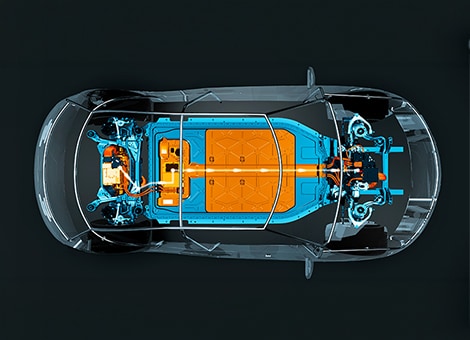
Electric vehicles represent the most prominent driver. These platforms rely on high-voltage wiring systems to deliver power from battery packs to motors and auxiliary systems, all while operating under thermal, mechanical, and environmental stress.
But the story extends beyond mobility. Renewable energy installations from wind turbines to solar fields require extensive high-voltage cabling exposed to harsh outdoor conditions. Industrial automation systems are increasingly electrified and interconnected, requiring durable protection against chemicals, vibration, and heat. Even the rollout of 5G infrastructure introduces new demands for reliable high-voltage cable protection.
Together, these forces are expanding the role of performance materials from supporting components to enabling technologies.
Engineering for Failure or Preventing It
In high-voltage systems, failure is rarely attributed to a single cause. Instead, it arises from a complex interplay of stressors thermal, mechanical, electrical, chemical, and even radiation-based degradation mechanisms.
Heat shrink materials must therefore perform across multiple dimensions simultaneously. They must resist thermal degradation at high temperatures, maintain flexibility without cracking at low temperatures, and withstand mechanical fatigue from vibration and bending. Electrically, they must prevent breakdown and control leakage currents. Chemically, they must endure exposure to oils, solvents, and moisture.
This multi-factor challenge has driven innovation in polymer science. Materials such as polyolefin, silicone, EPDM, and fluoropolymers are selected based on specific application requirements, balancing voltage tolerance, temperature resistance, flexibility, and chemical stability.
The result is not a single “best” material, but a portfolio of engineered solutions tailored to context.
The Science Behind the Shrink
At the heart of heat-shrink tubing lies a deceptively simple concept: memory.
During manufacturing, polymer chains are cross-linked through processes such as radiation exposure, creating a stable molecular network. The material is then expanded and cooled, locking it into a temporary shape. When reheated during installation, the polymer “remembers” its original configuration and contracts tightly around the substrate.
This process transforms a passive material into an active solution one that adapts to its environment and forms a reliable barrier against external factors.
Electrical performance depends heavily on dielectric properties. Heat shrink tubing is designed with high dielectric strength to resist breakdown under electric fields, coupled with high insulation resistance to minimise current leakage.
Even subtle material characteristics such as dipolar responses and permittivity play a role in how energy is stored and dissipated within the system, influencing long-term reliability.
Beyond Tape: Precision Over Simplicity
For decades, electrical tape served as a default solution for insulation. But in high-voltage applications, its limitations are increasingly evident.
Unlike tape, heat shrink tubing provides a precise, pre-engineered fit determined by shrink ratios, supporting consistent performance. It resists environmental degradation more effectively and is designed to maintain adhesion over its service life.
Cold shrink alternatives offer another approach, using elastomeric materials that contract without heat. While these solutions bring advantages in installation safety and environmental adaptability, heat shrink remains the preferred choice in many applications due to its robust mechanical and sealing performance.
The shift from tape to advanced tubing reflects a broader evolution toward engineered reliability over convenience.
Reliability Measured in Decades
Perhaps the most striking expectation placed on high-voltage insulation is longevity. In many applications, heat shrink solutions are designed to perform reliably for extended service lives under defined test and operating conditions
Achieving this level of durability requires rigorous testing. Standards organisations such as UL, ASTM, and CSA define protocols that evaluate flammability, tensile strength, dielectric performance, heat ageing, and resistance to environmental factors.
Compliance with directives such as RoHS supports conformity with applicable substance-restriction requirements. Compliance with RoHS relates to restricted hazardous substances and should not, on its own, be presented as a broader “sustainability” or environmental-benefit claim.
For automotive applications, additional testing frameworks such as those defined by OEMs add another layer of validation, ensuring materials meet the specific demands of electrified vehicles.
The Quiet Enabler of Innovation
As electric vehicles evolve into connected, software-defined platforms, the complexity of their electrical systems continues to increase. Heat shrink tubing, though rarely visible, plays a central role in enabling these advancements.
It supports the integration of high-voltage architectures, protects sensitive electronics, and contributes to safety across diverse operating conditions. It also contributes to efficiency by helping to reduce installation time, improve yield rates, and simplify maintenance processes.
In this sense, it is not merely a component but a system-level enabler.
A Material Future
The story of heat-shrink tubing is ultimately a story about materials how they are engineered, combined, and deployed to solve complex problems. From co-extruded layers to cross-linked polymer networks, these innovations reflect a broader transformation in how industries approach performance and reliability.
As electrification accelerates and infrastructure becomes more interconnected, the demands placed on materials will only intensify. Solutions must deliver not just performance, but safety, durability, and sustainability at scale
.The challenge for manufacturers and opportunity for marketing leaders is to articulate this hidden value. To move beyond product features and tell a larger story about enabling technologies that make modern life possible.
Because in the end, the success of electrification will not depend solely on the innovations we can see but on the invisible systems that make everything else work.