Application
The Role of Differential Pressure Sensing in AI-Scale Fuel Cell Deployment
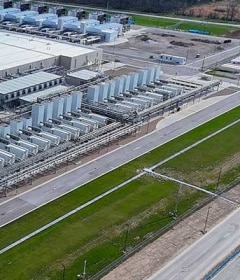
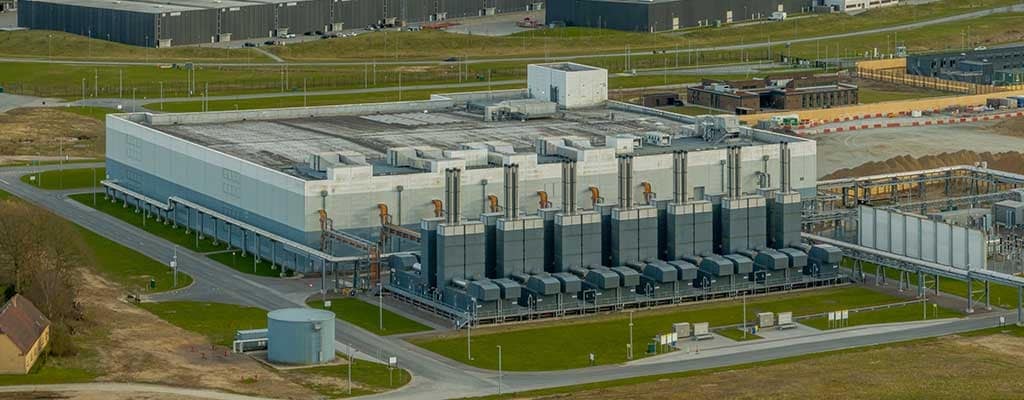
Fuel cells and gensets both play essential roles in behind the meter (BTM) AI data center design, but their roles are diverging as electrical demand, grid constraints intensify. Gensets remain the dominant emergency-resiliency asset: fast-start, high-power machines that operators trust and that fit cleanly into Tier III and Tier IV architectures. Fuel cells, however, increasingly serve as the continuous-duty operational power layer, providing on site generation that stabilizes baseload consumption and bypasses transmission bottlenecks. As AI campuses push toward multi-megawatt continuous loads and face multi-year interconnect delays, fuel cells become the technology that enables growth, while gensets continue to protect uptime.
AI Power Deployment
As fuel cells shift from supplemental generation to primary operational infrastructure, sensor reliability becomes a design-critical concern. Among all sensing elements, differential-pressure (ΔP) transducers are the most consequential. They govern the pressure relationships that define safe operation, efficient reactant flow, and long-term subsystem health. For engineers who specify ΔP transducers, whether for fuel cells, filtration systems, cooling loops or industrial process equipment, the fuel cell environment provides a clear illustration of how ΔP signals anchor both real-time control and degradation tracking.
Behind-the-Meter AI Power Deployment
Evolving Roles of Fuel Cells and Gensets
| Dimension | Fuel Cells | Gensets |
|---|---|---|
| Primary Role Today | Capacity relief; continuous on-site generation | Emergency backup; Tier III/Tier IV resiliency |
| Future Role | Primary operational power layer; baseload and load-following | Emergency layer only; fault-tolerant backup |
| Strengths | Dispatchable baseload; grid-capacity bypass; hydrogen integration; low emissions | Fast-start; high-power density; mature technology; operator familiarity |
| Limitations | Higher capex; fuel supply coordination; slower transient response than gensets | No contribution to grid-capacity constraints; idle except during emergencies |
| AI-Campus Fit (Current) | Supplemental generation; capacity stabilizer | Core resiliency mechanism |
| AI-Campus Fit (Future) | Essential for build-out; enables multi-MW continuous loads | Necessary but insufficient; supports uptime only |
| Impact on Grid Constraints | Direct mitigation - reduces dependence on utility capacity | No mitigation - still required full grid interconnect |
| Operational Behavior | Continuous; load-following; dispatchable | Intermittent; emergency-only |
Why Differential Pressure Matters in Fuel Cell Applications
As fuel cells transition from a supporting role to the primary power layer for AI campuses, their reliability becomes a first order design concern. That reliability depends on a set of subsystems that keep the electrochemical stack stable under rapid load swings and Tier III/Tier IV expectations. Among these subsystems, differential-pressure (ΔP) transducers are foundational. They govern membrane protection, airflow balance, hydrogen recirculation, and cooling performance, all of which determine the safety and reliability of fuel-cell systems under real-world conditions.
Differential pressure transducers are not diagnostic accessories, they are real-time control signals that keep the fuel-cell stack within its narrow safe operating window. They detect fast, safety critical events such as membrane crossover, and they reveal slow-drift degradation in air, fuel and cooling subsystems that would otherwise erode performance or availability. In modern AI data-center deployments, where electrical load can swing sharply and uptime expectations are uncompromising, ΔP sensing is the backbone of fuel-cell stability.
Fuel-Cell ΔP Monitoring
Anode to Cathode Stack ΔP
Membrane Integrity
The anode-to-cathode ΔP is the most direct indicator of membrane integrity. A rapid drop signals a crossover event (gas mixing across the membrane) which can escalate quickly into serious damage. The system responds with an immediate threshold alarm and emergency shutdown. Over time, gradual drift in this ΔP value helps track early membrane weakening or partial obstruction, enabling predictive maintenance before failure.
Cathode Air Inlet–Outlet ΔP
Airflow and Filter Health
The cathode ΔP tracks airflow resistance and filter condition. A slow, steady rise over days or weeks points to increasing resistance in the air path, often caused by filter loading, compressor wear, or fouling within cathode channels. This measurement supports trend based maintenance planning rather than emergency response. It also plays a vital role in maintaining reactant stoichiometry, ensuring the fuel cell stack receives consistent oxygen supply for efficient electrochemical conversion.
Anode Recirculation Loop
Hydrogen Recovery and Pressure Stability
Within the anode recirculation loop, ΔP confirms hydrogen recovery and circulation performance. A sudden signal loss or sharp drop indicates malfunction in the ejector or pump or fouling in the reformer or anode channels. Because hydrogen flow directly affects fuel utilization and stack stability, the control system reacts within seconds. This measurement is particularly important for solid oxide fuel cells (SOFCs), where precise pressure management prevents localized starvation and thermal stress.
Cooling Circuit ΔP
Thermal Management and BoP Health
Cooling loop ΔP monitors pump health and blockage conditions across the balance of plant (BoP). Rising ΔP suggests fouling or blockage; falling ΔP indicates pump degradation. Tracking this differential over time reveals gradual wear, micro blockages, or coolant contamination that can compromise heat removal efficiency. These signals form the basis of long-term degradation tracking for the thermal subsystem.
| Measurement Location | What It Monitors | Failure Signature | Response Type | Governing Process | Degradation Tracking Role |
|---|---|---|---|---|---|
| Anode to Cathode Stack ΔP | Membrane Integrity | Rapid drop - crossover event | Threshold alarm / emergency shutdown | Stack membrane protection | Tracks gradual imbalance drift indicating early membrane weakening or channel obstruction |
| Cathode Air Inlet-Outlet ΔP | Filter condition, airflow health | Gradual rise over days/weeks | Trend monitoring / planned maintenance | Reactant stoichiome try & flow balancing | Identifies compressor wear, cathode channel fouling, long-term airflow degradation |
| Anode Recirculation Loop ΔP | Hydrogen recapture confirmation | Signal loss or sharp drop | Threshold alarm / seconds-level response | SOFC-specific pressure management | Reveals declining ejector / pump performance, reformer fouling, anode channel degradation |
| Cooling Circuit ΔP | Pump health, blockage detection | Rising ΔP or anomalous reduction | Trend monitoring / early warning | Balance of plant (BoP) | Tracks pump wear, coolant fouling, micro-blockages, long-term thermal loop degradation |
Fuel Cell Deployment
The Role of ΔP Sensing in AI-Scale Fuel Cell Deployment
Fuel cells are rapidly becoming the defining technology for BTM power in AI data centers, shifting from supplemental generation to the primary operational layer that enables multi megawatt continuous loads and mitigates grid capacity constraints. While gensets remain indispensable for emergency resiliency, they cannot address the structural challenge of insufficient deliverable grid power. Fuel cells can — and their reliability depends on a network of differential pressure measurements that safeguard membrane integrity, airflow balance, hydrogen recirculation, and cooling performance.
These ΔP signals provide both fast acting protection and long term degradation tracking, ensuring fuel cell systems operate safely, efficiently, and predictably within the demanding environment of modern AI campuses.