
HUMANOID ROBOTS
Connectivity for the Age of Physical AI
High-speed data. Intelligent motion. Miniaturized design. Connectivity solutions for evolving humanoid robotic systems.
Humanoid robots combine AI compute, advanced sensing, distributed control, wireless communication, and precision movement within compact, constantly moving architectures. As these systems evolve, connectivity becomes increasingly important to supporting system performance, reliability, and scalability.
TE Connectivity (TE) offers miniaturized interconnect and antenna solutions designed to help support the bandwidth, power, wireless, and motion requirements of size and weight constrained humanoid and physical AI systems. With experience across industrial, communications, and embedded systems applications, TE helps customers address evolving connectivity requirements in humanoid architectures.

What Are Humanoid Robots?
Humanoid robots are AI-driven robotic systems designed to operate in environments built for people. These systems combine machine vision, sensing, AI inferencing, distributed compute, wireless communication, and precision actuation within human-like robotic architectures.
Unlike traditional fixed industrial robots, humanoid systems are designed to support more adaptive, mobile, and collaborative operations across industrial automation, logistics, warehousing, manufacturing, and service environments.
As humanoid platforms evolve from research and pilot systems toward broader deployment, connectivity infrastructure becomes increasingly important to helping enable consistent operation, serviceability, and scalable system design.
Connectivity Challenges in Humanoid Architectures
Humanoid robots introduce new connectivity challenges compared to traditional industrial automation systems. AI inferencing, machine vision, distributed compute, wireless communication, and precision motion control all increase demands onsystem architecture.
At the same time, robot designs continue pushing toward:
- Higher bandwidth and lower latency
- Greater miniaturization and density
- Reduced weight and harness complexity
- Continuous movement and operation in vibration-intensive environments
- Increased wireless and cloud connectivity
- Scalable architectures designed for field serviceability
As humanoid platforms evolve from prototype systems toward broader commercialization, connectivity infrastructure becomes foundational to supporting long-term operation and scalable system architectures.
TE Solutions Across Humanoid Robotic System Architectures
TE Connectivity supports evolving humanoid architectures with connectivity solutions spanning AI compute, sensing, motion systems, wireless communication, and power distribution.
The products shown below are suggested examples from TE’s commercial portfolio for customers to evaluate as part of their design and development process. Customers are responsible for all part selection decisions for their applications and determining suitability for end use.

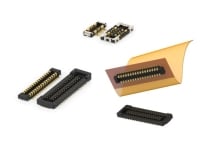
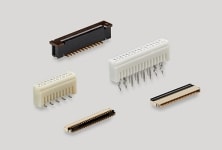
Vision & Sensing
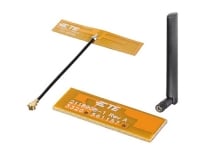
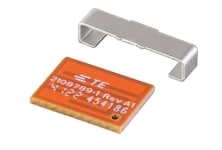
Machine vision, sensor arrays and localization systems require high-speed data transmission, miniaturized routing, and reliable wireless communication within dense robotic architectures.
Key Connectivity Requirements
- Low Latency
- Signal Integrity
- Dense Routing
- Wireless Sensing & Localization
Applications
- Machine Vision
- Localization
- Sensor Fusion
- Wireless Sensing
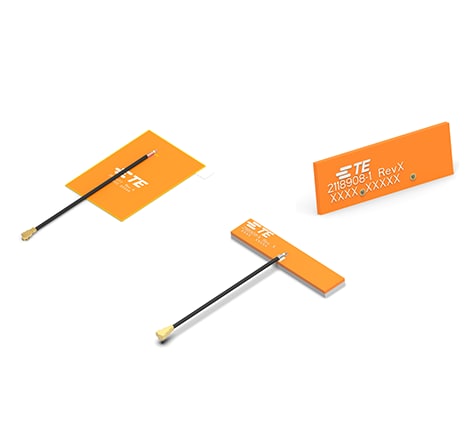
TE Solutions
 e
e
 e
e
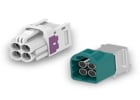
Control & Communication
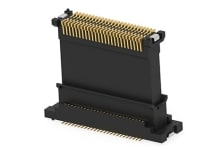
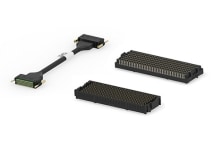
Distributed compute and AI processing architectures require high-density interconnects designed to support real-time communication across sensing, memory, networking, and edge AI systems.
Key Connectivity Requirements
- AI Compute Connectivity
- Edge Processing
- Distributed Control
- High-Speed Data
- Signal Integrity
Applications
- AI Processing
- Distributed Compute
- Edge AI Systems
- Networking
- Control Architectures
TE Solutions
 e
e
 e
e
 e
e
 e
e
 e
e
 e
e
Power Distribution
Humanoid systems require efficient power routing across compact architectures while minimizing interference with sensitive data signals and supporting system operation.
Key Connectivity Requirements
- Power Efficiency
- Simplified Routing
- System Safety
- Hybrid Architectures
Applications
- Battery Systems
- Charging Systems
- Power Management
- Distributed Power
- Safe Shutdown Systems
TE Solutions
Movement
Continuous movement, vibration, and constrained joint designs create demanding requirements for connectivity performance, flexibility, and durability.
Key Connectivity Requirements
- Motion Durability
- Miniaturization
- Mechanical Flexibility
- Multiple Bending Cycles
Applications
- Actuation Systems
- Joint Connectivity
- Motion Control
- Flexible Routing
- Continuous Movement Systems
TE Solutions
Why Connectivity Matters in Physical AI Systems
AI-driven robotic systems require communication between compute, sensing, motion control, wireless systems, and power architectures operating simultaneously within constrained mechanicalenvironments.
As humanoid systems become more capable, connectivity infrastructure are increasingly designed to support:
- Real-time AI inferencing
- High-speed machine vision systems
- Distributed sensing and control
- Wireless communication and telemetry
- Efficient power delivery
- Miniaturized subsystem integration
Connectivity is becoming foundational to enabling scalable, serviceable, and manufacturable humanoid system architectures.
Why TE Connectivity
TE combines broad connectivity experience with application experience across industrial, automotive, communications, and embedded computing environments.
Our portfolio spans:
- High-speed data interconnects
- RF and antenna solutions
- Hybrid power + signal connectivity
- Cable assemblies
- Board-level interconnect systems
Combined with global engineering and manufacturing capabilities, TE helps customers support evolving humanoid architectures from development through scaled deployment.

Miniaturized Interconnect Capabilities

High-Speed and RF Connectivity

Global Manufacturing Footprint

Broad Subsystem Coverage

Experience in Demanding Environments
Supporting the Next Generation of Physical AI
As humanoid and physical AI systems continue evolving, connectivity requirements are expected to become increasingly complex across compute, sensing, vision, power, wireless communication, and motion systems.
TE Connectivity is helping customers address these emerging challenges with connectivity solutions designed to support evolving robotic architectures.
Humanoid Robots Connectivity FAQ
What types of connectors are used in humanoid robots?
Humanoid robots use a combination of high-speed connectors, RF connectors, floating connectors, cable assemblies, hybrid power + signal interconnects, and miniaturized connectivity solutions.
Why are miniaturized connectors important in humanoid robots?
Miniaturized connectors help reduce weight, simplify cable routing, support dense subsystem integration, and improve flexibility within robotic joints and moving architectures.
What wireless technologies are used in humanoid robots?
Humanoid systems increasingly use Wi-Fi, Bluetooth LE, 5G, UWB, GNSS, and other RF technologies for telemetry, localization, cloud connectivity, and subsystem communication.
What role does connectivity play in AI-driven robots?
Connectivity infrastructure supports communication between compute, sensing, vision, motion control, wireless systems, and power architectures within AI-driven robotic systems.

TE, TE Connectivity, TE connectivity (logo), and EVERY CONNECTION COUNTS are trademarks owned or licensed by the TE Connectivity plc family ofcompanies. Other product names, logos, and company names mentioned herein may be trademarks of their respective owners.While TE has made every reasonable effort to ensure the accuracy of the information in this document, TE does not guarantee that it is error-free, nordoes TE make any other representation, warranty or guarantee that the information is accurate, complete, correct, reliable or current. TE reserves theright to make any adjustments to the information contained herein at any time without notice. TE EXPRESSLY DISCLAIMS ALL IMPLIED WARRANTIESREGARDING THE INFORMATION CONTAINED HEREIN, INCLUDING, BUT NOT LIMITED TO, ANY IMPLIED WARRANTIES OF MERCHANTABILITY ORFITNESS FOR A PARTICULAR PURPOSE. In no event will TE be liable for any direct, indirect, incidental, special or consequential damages arising from orrelated to recipient’s use of the information. It is the sole responsibility of recipient of this information to verify the results of this information using theirengineering and product environment. Recipient assumes any and all risks associated with the use of the information. Antenna performance may vary. TE is a component manufacturer, and customer and/or end-user is responsible for all end-use compliance and regulatory requirements. These marketingmaterials do not constitute an order or agreement of sale, and TE Connectivity shall be bound by and subject to only those terms and conditions set forthin a written agreement referencing specific products and signed by an authorized representative of TE.