Application
A Guide to LVDT Sensors and Corrosion-Resistant Alloys
Seawater corrosion mechanisms, the alloys that resist them, and how the hermetically sealed LVDT can deliver accurate, reliable performance in subsea conditions.
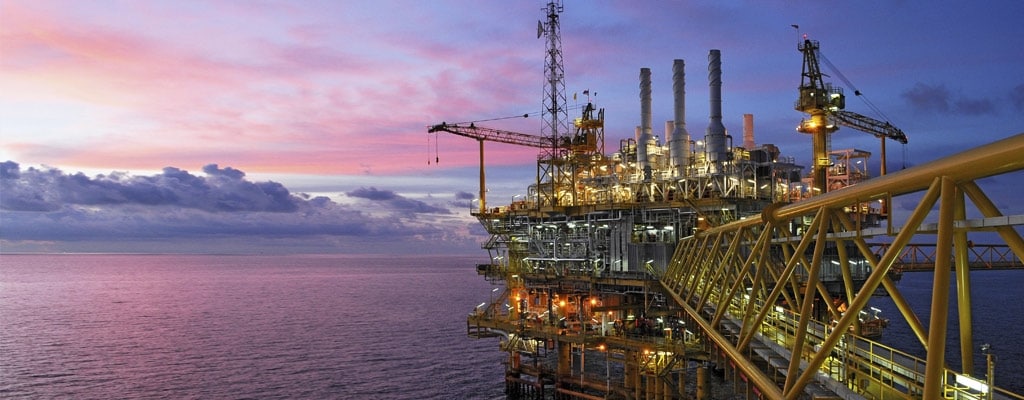
Subsea environments are among the most difficult operating conditions for any sensor. At ocean depths approaching 15,000 feet, underwater sensors are exposed to pressures of up to 7,500 psi, along with aggressive corrosive conditions and long operational lifecycles that can exceed 20 years. Because the service cost of replacing a subsea sensor is often greater than the sensor itself, extended sensor life is frequently written directly into operating specifications. Meeting that requirement comes down to two coupled engineering decisions: the right sensor technology and the right housing materials.
Seawater Corrosion
Why Seawater is so Hostile to Sensors
Seawater attacks metals at varying depths, resulting in accelerated corrosion based on varying levels of oxygen, temperature, pH, salinity (chlorinity), biological activity, electrical conductivity, and velocity flow rates present at different depths. Seawater’s high electrical conductivity promotes macro cell corrosion and increases galvanic corrosion, which accelerates temperature rise and further drives corrosion.
The principal corrosive constituents of seawater include:
- Anions: chloride, sulfate, bromine, and bicarbonate
- Cations: sodium, magnesium, calcium, and potassium
- Other contributors: dissolved oxygen, carbon dioxide, and micro-organism life
Dissolved chlorides and other salts increase localized corrosion of stainless steels and other active-passive materials, typically appearing as pitting, crevice, or intergranular corrosion — all of which can lead to sensor failure. Stagnant or polluted waters add another threat: they often promote sulfate-reducing bacteria (SRB) that further degrade sensor materials. Sensors used for control and safety functions can be submerged at depths from a few tenths of a foot to more than 1,000 feet — and in deep-water applications, well beyond.
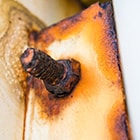
MIC
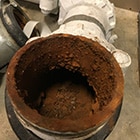
Microbially Induced Corrosion (MIC) can be a serious threat to sensor operation, particularly for low-grade austenitic stainless steels. MIC is a material-degradation process that most often appears on welded joints and can lead to weld failure if not caught in time.
MIC bacteria fall into several functional categories:
- slime-forming
- acid-producing
- iron-oxidizing
- sulfate-reducing
- iron-reducing
- nitrate-reducing
Aerobic species are active in oxygen-rich environments; anaerobic species dominate where oxygen is low. Hundreds of individual species can form MIC. Colonies typically cluster at rough spots, inclusion sites, existing corrosion sites, or cuts on the material surface. Feeding on oxygen, iron, and manganese, they produce a sticky paste that attracts additional biological and non-biological species, forming crevices and oxygen- and ion-concentration cells — the precursors to deeper corrosion.
The SRB-APB Mechanism
Sulfate-reducing bacteria (SRB) are highly corrosive when environmental conditions favor their growth, converting sulfate to harmful sulfide. SRB depends on Acid Producing Bacteria (APB), the main initiator of MIC. APB consumes oxygen and produces low-molecular-weight organic acid and alcohol; SRB then consumes that organic acid and produces hydrogen sulfide. Sulfide acts as a cathode to steel, attacking the sensor surface in an electrochemical process that consumes anodic iron, producing pitting and crusty tops or flakes on the material. The process accelerates when seawater temperatures fall between 25°C and 41°C, depending on location.
Material Selection
Whether corrosion originates from varying depth levels, galvanic effects, or biological attack, matching materials to the service application is the top priority for long-term sensor performance. Material selection is typically affected by system reliability requirements, availability, cost, and manufacturability.
Where Stainless Steel Fails
Common stainless steels — including 304 and 316 — should not be used for sensors that will operate in direct contact with seawater. Duplex steels with higher alloy content and a Pitting Resistance Equivalent Number (PREN) greater than 40 have been used as alternatives, but duplex alloys do not guarantee long, reliable life in deep-sea or Arctic applications. PREN is calculated from the weighted contribution of chromium (Cr), molybdenum (Mo), and nitrogen (N):
PREN = %Cr + (3.3 × %Mo) + (16 × %N)
At depths of 2,000 ft or more, where seawater temperature is around 5°C, stainless steel becomes acceptable.
Nickel-Based Superalloys
The Default for Reliability
Nickel-based superalloys offer excellent immunity against localized corrosion and against both oxidizing and reducing media. They cost more than stainless or duplex steels, but they are suitable for applications requiring long service life.
| Alloy | Recommended Service Environment |
|---|---|
| Alloy 400 | Shallow, warm waters; resists sea-life fouling, pitting, and microorganism attack in high-oxygen conditions; used successfully in the Middle East and Africa |
| Alloy K | Shallow warm waters (similar service to Alloy 400) |
| Alloy 625 | Subsea applications at depths of 7,500 ft with external pressures exceeding 3,500 psi; high Ni, Cr, and Mo content |
| Alloy 718 | Combined pressure and corrosion resistance for long-life LVDT assemblies fully exposed to seawater |
| Alloy C276 | Critical components requiring excellent localized-corrosion resistance |
Titanium also offers strong protection against localized corrosion. By contrast, housings and core carriers made from stainless steel may experience reduced service life in shallow warm waters — a counterintuitive but important constraint for tropical and equatorial deployments.
LVDT Sensors

Linear Variable Differential Transformer (LVDT)
Because of the combined effects of pressure and seawater, subsea applications pose special challenges for reliable operation. Depending on temperature, salinity, oxygen levels, and depth, the Linear Variable Differential Transformer (LVDT) when hermetically sealed and constructed of special alloys — is often the most suitable technology to deliver accurate, reliable performance in subsea conditions.
Hermetically Sealed LVDT Construction
A hermetically sealed LVDT prevents outside media from entering the windings, which can make the unit impervious to water and chemicals that would otherwise shorten sensor life. A typical assembly includes:
- A heavy-wall metal housing with an integral metal bore liner of 316 stainless steel or a super nickel alloy
- Bore liner and end washers welded into a hermetic seal free from oxidation-producing faults that could cause leakage
- Coils wound on a one-piece hollow form of thermally stable, glass-reinforced polymer, encapsulated against moisture, wrapped in a highly permeable magnetic shield, and secured in a cylindrical metal housing
- Optional potting compounds or encapsulating resins for severe applications
- Leads sealed with a glass-sealed header or compression bushing, sheathed in stainless steel or PTFE-coated to prevent connection failure
This construction allows free movement of the core while sealing the windings from the surrounding media.
LVDT Operating Limits
- Pressure: Typical hermetically sealed LVDTs withstand operating pressures up to 3,000 psig
- Temperature: The hermetically sealed core withstands temperatures up to 400°F, depending on design and application conditions
- Depth (with the right alloy): LVDT assemblies designed with Alloy 718 or other superalloys can be fully exposed to seawater at depths up to 15,000 ft and external pressures of approximately 7,500 psi
Applications
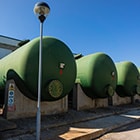
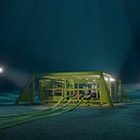
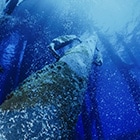
LVDT linear position sensors are widely used for condition monitoring as part of control and safety systems across offshore platforms, desalination systems, mooring cables, sea-floor wellheads, oil and gas gathering systems, loading systems, platform stability monitoring, and control valves and chokes.

Structural Monitoring on Offshore Platforms
LVDT accuracy and long-term operation are particularly suited to monitoring structural movement for long-term Finite Element Analysis (FEA) of pipelines, derricks, moorings, choke valves, extensometers, and other high-stress members on offshore oil platforms. Subsea LVDTs can measure extension of structural members to a fraction of a microstrain, and platform shift is typically monitored to less than 2 mm.
Subsea Christmas Trees
A Subsea Christmas Tree is an assembly of valves, spools, and fittings for an oil well that resembles a decorated tree. It prevents uncontrolled release of oil or gas while directing flow from the well. Valves and chokes — controlled remotely by hydraulic or electric actuators — open and close the pipes bringing product from the seabed. LVDTs provide the position feedback required to monitor and control choke status as part of the subsea control module. Single or redundant LVDTs mounted on valve actuators can confirm that flow is entirely shut off when chokes are nearly closed. Failure to completely close a choke can result in an environmental disaster — as experienced in the Gulf. Typical full strokes range from 2 to 12 inches.
Safety Cable Monitoring
LVDTs are also used in subsea towers to monitor extension of safety cables, providing critical information during severe weather or earthquakes. This data supports evacuation of the drilling platform and closing of the oil well — an application driven by safety and environmental policies mandated by oil and insurance companies.

Engineering Summary
For sensors in seawater service, three design rules emerge directly from the materials science:
- Match the alloy to depth and temperature. Alloy 400 in shallow warm water; stainless steel only below ~2,000 ft where temperatures are near 5°C; Alloy 625, 718, or C276 for deep, high-pressure service.
- Specify a hermetic seal whenever the sensor sees corrosive or pressurized media. Welded bore liners, sealed lead exits, and encapsulated windings separate a 20-year sensor from a replacement event.
- Treat MIC as a design constraint, not a maintenance issue. Welded joints in low-grade austenitic stainless steels are the most common failure points, and SRB-driven attack accelerates sharply between 25°C and 41°C.
When these constraints are respected, the hermetically sealed LVDT — built around the right superalloy — is a reliable position-measurement technology for subsea control and safety systems.
FAQs
Seawater Corrosion Fundamentals
Why is seawater so destructive to sensor metals?
Seawater attacks metals at varying depths because of fluctuating levels of oxygen, temperature, pH, salinity (chlorinity), biological activity, electrical conductivity, and velocity flow rates. The high electrical conductivity of seawater also promotes macro cell corrosion and increases galvanic corrosion, which accelerates temperature rise and further drives the corrosion process.
What are the main corrosive constituents of seawater?
The primary corrosive ions in seawater are chloride, sulfate, bromine, and bicarbonate (anions), along with sodium, magnesium, calcium, and potassium (cations). Dissolved oxygen, carbon dioxide, and micro-organism life are additional contributors. Dissolved chlorides and other salts are the principal drivers of localized corrosion in stainless steel and other active-passive materials.
What forms of corrosion typically cause subsea sensor failure?
Subsea sensors most often fail from localized corrosion in the form of pitting, crevice, or intergranular corrosion. Stagnant or polluted waters add a fourth threat by promoting sulfate-reducing bacteria (SRB) that further degrade sensor materials.
Microbially Induced Corrosion
What is Microbially Induced Corrosion (MIC) and why does it matter for sensors?
MIC is a corrosion process involving microbial degradation of the sensor material. It most often appears on welded joints and leads to weld failure if not caught in time. MIC can be especially dangerous for low-grade austenitic stainless steels and is a leading cause of sensor failure in subsea service.
What types of bacteria cause MIC?
MIC bacteria fall into five functional categories: slime-forming, acid-producing, iron-oxidizing, sulfate-reducing, and iron- and nitrate-reducing. Aerobic species are active in oxygen-rich environments while anaerobic species dominate in low-oxygen conditions, and hundreds of individual species can form MIC.
How does the SRB–APB mechanism attack sensor steel?
Acid Producing Bacteria (APB) consumes oxygen and produce low-molecular-weight organic acid and alcohol. Sulfate-Reducing Bacteria (SRB) then consume that organic acid and produce hydrogen sulfide. The sulfide acts as a cathode to steel and attacks the sensor surface in an electrochemical process that consumes anodic iron, producing pitting and crusty tops or flakes on the material.
At what temperature does microbial corrosion accelerate?
The SRB-driven corrosion process accelerates sharply when seawater temperatures fall between 25°C and 41°C, depending on global location. Engineers specifying sensors for tropical or equatorial deployments should treat this range as a critical design constraint.
Stainless Steel and PREN
Can 304 or 316 stainless steel be used for sensors in seawater?
Common stainless steels — including 304 and 316 — generall not recommended in certain subsea environments. At depths of 2,000 ft or more, where seawater temperature is around 5°C, stainless steel becomes acceptable. Housings and core carriers made from stainless steel may experience reduced service life in shallow warm waters.
What is PREN and how is it calculated?
PREN (Pitting Resistance Equivalent Number) measures an alloy’s resistance to pitting corrosion based on its chromium (Cr), molybdenum (Mo), and nitrogen (N) content. The standard formula is:
PREN = %Cr + (3.3 × %Mo) + (16 × %N)
Duplex steels with PREN greater than 40 have been used as alternatives to stainless steel, but duplex alloys do not guarantee long, reliable life in deep-sea or Arctic applications.
LVDT Technology & Hermetic Sealing
Why is the LVDT the preferred sensor technology for subsea applications?
Because of the combined effects of pressure and seawater, subsea applications pose special challenges for reliable operation. Depending on temperature, salinity, oxygen levels, and depth, the Linear Variable Differential Transformer (LVDT) — when hermetically sealed and constructed of special alloys — is often the most common technology that can deliver accurate, reliable performance in subsea conditions.
What does a hermetically sealed LVDT assembly include?
A hermetically sealed LVDT helps prevent outside media from entering the windings. A typical assembly includes:
- A heavy-wall metal housing with an integral metal bore liner of 316 Stainless Steel or a super nickel alloy
- Bore liner and end washers welded into a hermetic seal free from oxidation-producing faults
- Coils wound on a one-piece hollow form of thermally stable, glass-reinforced polymer, encapsulated against moisture, wrapped in a highly permeable magnetic shield, and secured in a cylindrical metal housing
- Optional potting compounds or encapsulating resins for severe applications
- Leads sealed with a glass-sealed header or compression bushing, sheathed in stainless steel or PTFE-coated
This construction allows free movement of the core while sealing the windings from the surrounding media.
What are the operating limits of a hermetically sealed LVDT?
Typical hermetically sealed LVDTs withstand operating pressures up to 3,000 psig and core temperatures up to 400°F. When designed with Alloy 718 or other superalloys, an LVDT assembly can be fully exposed to seawater at depths up to 15,000 ft and external pressures of approximately 7,500 psi.