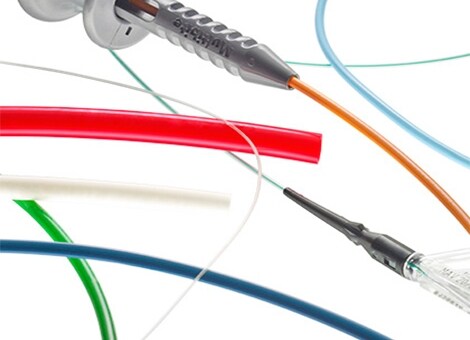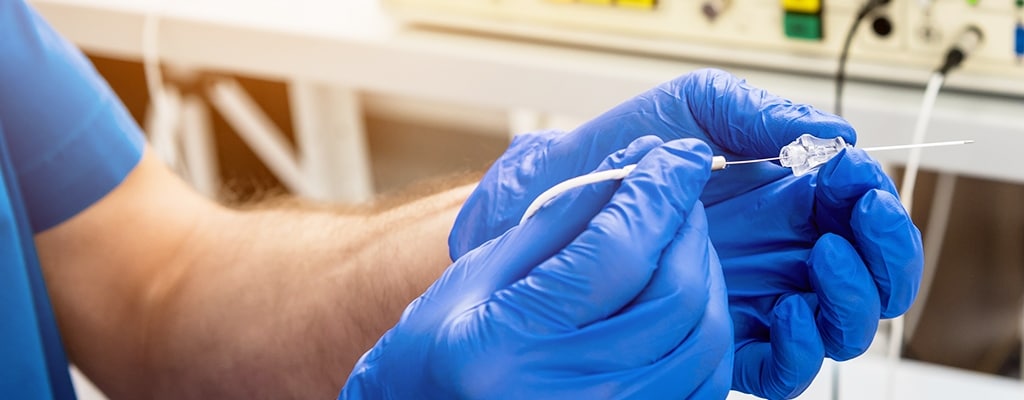
Thin Wall Heat Shrink for PFA Catheters
This case study highlights how TE Medical partnered with the customer to engineer a thin-wall heat-shrink solution designed to meet the demands of cardiac-based catheter applications.
Challenge
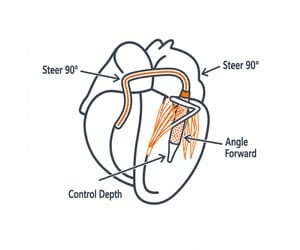
A medical device manufacturer was developing a high-precision PFA catheter designed for accurate device delivery within a beating heart. The dynamic nature of cardiac motion created significant engineering challenges, requiring a solution that could maintain precision and stability in a constantly moving environment.
The device required:
- Advanced navigation capabilities to maneuver within complex cardiac anatomy
- Reliable performance despite continuous motion and anatomical interference
- Miniaturization to support precise device placement
- Tight dimensional tolerances to ensure consistency and accuracy
Balancing flexibility, dimensional control, and material performance at micro-scale dimensions was critical to the catheter’s success.
Solution
TE Medical partnered with the customer to engineer a thin wall heat shrink solution designed to meet the demands of cardiac-based catheter applications.
Key elements of the solution included:
- Thin wall design with precise dimensional control, delivering exceptional flexibility while meeting stringent tolerance requirements
- Innovative material fusion, integrating spline structures with Pebax® through tailored expansion characteristics
- Optimized electrical properties, enabling smaller device tips for enhanced procedural precision
- Co-extrusion technology, securing tubing to the substrate while maintaining tight recovered inner diameter specifications
- Application-specific crosslinking, carefully engineered to control gripping force and performance
This approach combined advanced materials science with micro-engineering precision to support next-generation catheter development.
Results
The collaboration resulted in a micro-engineering breakthrough that advanced the limits of catheter miniaturization and manufacturability.
Key outcomes included:
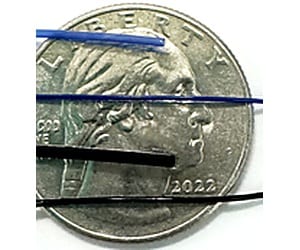
- Achieved 0.008" recovered inner diameter (ID) with 0.004" wall thickness
- Integrated a 0.001" adhesion layer to optimize spline-to-substrate bonding
- Implemented design for manufacturability (DFM) principles to improve production yield
- Reduced point-of-use scrap, enhancing overall device reliability
By merging micro-scale precision with advanced polymer integration, the final design supported improved navigation, durability, and performance in demanding cardiac environments.

Capabilities
TE Medical’s expertise in thin-wall medical-grade heat-shrink tubing and micro-extrusion enables advanced catheter innovation through:
- Designing 0.008” recovered ID heat shrink with co-extrusion to secure tubing to substrates
- Application-specific crosslinking to precisely control gripping force
- Micro-scale dimensional control with exceptional flexibility
- Advanced material integration for spline and substrate bonding
- Improving point-of-use yield through scrap reduction and DFM implementation
Conclusion
Developing high-precision catheters for use within a beating heart requires a combination of material innovation, dimensional accuracy, and manufacturing expertise. Through advanced thin-wall heat-shrink technology and integrated material solutions, TE Medical enabled the customer to push the boundaries of miniaturization while maintaining performance and reliability. By aligning micro-engineering precision with scalable manufacturing strategies, TE Medical continues to support medical device manufacturers in advancing catheter technologies that improve procedural accuracy and patient outcomes.