Refrigerant Sensing in the Low-GWP Transition
Explore
GAS DETECTION SENSORS
Explore TE's refrigerant sensors designed to help detect HVAC leaks with sensor modules, cable assemblies, and safety components supporting US AIM Act compliance.
Connect With an Expert
*Required fields
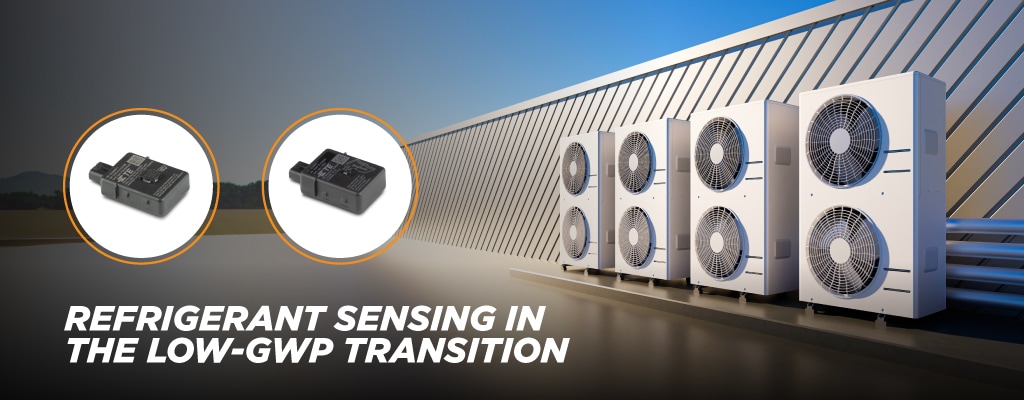
Engineering Considerations for Refrigerant Sensing in the Low-GWP Transition
Explore the regulatory, safety, and sensing considerations behind the transition to low-GWP refrigerants.
As the HVAC/R industry transitions to low-GWP refrigerants, engineers and OEMs face new challenges related to safety, regulatory compliance, and system design. Refrigerant sensing is becoming a critical component of leak detection and mitigation strategies for next-generation HVAC/R platforms. This white paper explores the environmental and regulatory factors driving the transition, the evolution of refrigerants, and the growing importance of refrigerant sensing technologies. It also examines sensor performance considerations, including detection accuracy, response time, environmental robustness, and long-term reliability, and provides an example of an A2L refrigerant sensor implementation.
Download White Paper to Learn:
- The environmental and regulatory drivers accelerating the transition to low-GWP refrigerants.
- How refrigerant technologies are evolving from traditional hydrofluorocarbon (HFCs) to A2L and A3 alternatives.
- Why leak detection is becoming a critical safety and compliance requirement for HVAC/R systems.
- Key performance considerations for refrigerant sensors, including accuracy, response time, and durability.
- The advantages and tradeoffs of different refrigerant sensing technologies.
- Design considerations for implementing refrigerant sensing solutions in HVAC/R platforms.