Insights on Materials Science
A Smarter Barrier for Safer Electrification
Authors:
Megan Beers, Senior Manager, Materials Development
Dejie Tao, Principal Scientist, Materials Development
When Batteries Catch Fire, This Material Fights Back
Electric vehicles are reshaping how the world moves — but as adoption accelerates, so does the industry's responsibility to make them safer. One of the most critical challenges in EV design is protecting against thermal runaway: the dangerous chain reaction that occurs when a battery cell overheats, potentially igniting neighboring cells and spreading fire rapidly through the battery pack. At TE Connectivity, our materials scientists have developed a breakthrough solution that doesn't just resist fire — it transforms in the face of it.
A Material That Rises to the Challenge
Developed by TE's Corporate Technology Center (CTC) Materials team, this advanced fire-resistant polymer composite is engineered to serve as an insulating barrier — for example, placed between EV battery modules. Under normal operating conditions, it behaves like a plastic: easy to process, easy to shape, can be mechanically flexible, and compatible with standard manufacturing techniques like injection molding and extrusion. But when exposed to extreme heat — such as the conditions generated during a battery fire — the material transforms in place.
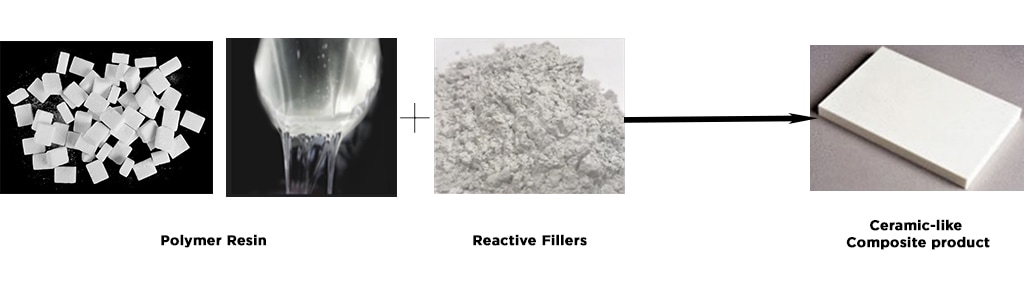
Through a carefully engineered in-situ chemical reaction, reactive inorganic fillers work with the polymer matrix to form a dense, crack-free ceramic-like barrier layer. The barrier layer withstands direct flame exposure at temperatures up to 1,200°C for at least 10 minutes while retaining structural insulation. In an EV battery application, this kind of barrier could help reduce the risk of fire propagation during a thermal runaway event.
Better Than the Alternatives — in Every Way That Matters
Until now, engineers designing fire protection faced difficult trade-offs. Traditional ceramic barriers are brittle, prone to cracking under rapid temperature changes (thermal shock), and difficult to manufacture into complex shapes. Mica-based solutions, while effective, carry a significant cost premium and present their own processing limitations. Standard polymer materials, meanwhile, simply melt or collapse when exposed to fire — exactly when protection is needed most.
TE's fire-resistant polymer composite addresses all of these shortcomings simultaneously:
- Flexibility & durability: Unlike rigid ceramics, the material retains flexibility prior to fire exposure — bending up to 90 degrees without cracking — making it far easier to integrate into complex product architectures.
- Superior thermal shock resistance: Testing confirms it outperforms conventional alumina (Al₂O₃) ceramics under thermal shock testing.
- Scalable, cost-effective manufacturing: Compatible with standard industrial equipment — including twin-screw extruders, injection molding machines, and calendering systems — the composite can be produced cost-effectively at scale.
- Cost advantage: By delivering high-performance fire protection through an engineered polymer system, this technology offers a more economical path compared to premium mica-based solutions.
Innovation for the Future
TE’s fire-resistant polymer composite technology can be built on both silicone rubber-based and thermoplastic (i.e. Nylon, Polypropylene, etc.)-based composite platforms, offering design flexibility across a range of electrical and thermal management applications. Silicone-based systems can be formed into flexible films or plaques, retaining bendability while delivering fire-resistant performance. Thermoplastic systems can be processed using familiar high-volume methods, for example into injection molded parts. In addition to separators and barrier materials for EV battery protection, these options can support additional applications such as fire-resistant high-voltage connector housings and components for fire propagation mitigation. If you have a fire-resistant system need, please reach out to connect with ourengineering teams about designing a solution for you.
At TE, innovation begins with understanding the toughest problems our customers face—and then applying deep materials science, engineering, and manufacturing expertise to solve them. In this way, TE is enabling safer, more reliable electrification technologies built for the future.