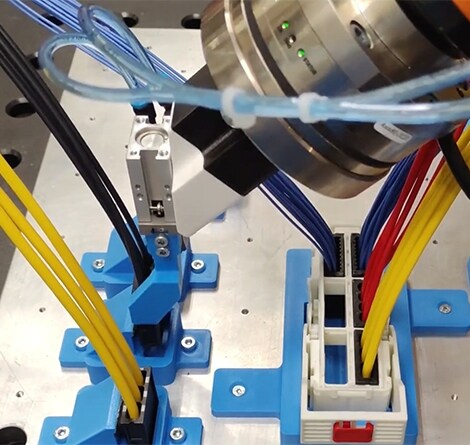
Automotive Harness Automation
As the industry moves toward zonal electrical/electronic (E/E) architectures, TE solutions help OEMs and suppliers simplify harness design, reduce complexity, and accelerate the shift to scalable, automated manufacturing for future-ready vehicles.
ROBOT
Precise robotic gripping, making it scalable for fully automated production lines.
FUTURE
Future-proof system integration - designed with standardized specifications ensuring compatibility with OEMs and suppliers.
NEXT
Advancing next generation mobility with fully-automated, end-to-end automotive wiring systems.
Advancing Vehicle Automation for Next-Gen E/E Architectures
As an innovation partner, TE was proud to support the Next2OEM initiative—funded by the German Federal Ministry for Economic Affairs and Energy (BMWE)—and contributed significantly to advancing automated processes in wiring harness production. The project focused on end-to-end automation of wiring systems across the full value chain, from harness manufacturing through installation in the vehicle. TE’s contributions were especially critical in the early design of components and mechanical interfaces, enabling stable automated handling and seamless integration into the broader process flow for next-generation E/E architectures. Through this work, our advanced connector geometry—tailored for automated manufacturing and evolving E/E requirements—helped establish new benchmarks for integration, scalability, and efficiency across the wiring harness value chain.
Automation and Next-Gen E/E Architectures Begin with Smart Design
As next-generation E/E architectures transform vehicle systems, the shift is redefining how wiring harnesses are designed and built. At TE Connectivity, automation begins not on the factory floor—but at the component design stage. Our advanced connector geometries are purpose-built for automated handling, enabling seamless integration into modern electrical systems.
TE’s automation-ready connectors help OEMs and suppliers streamline production, reduce complexity, and accelerate the transition to smarter, more scalable manufacturing across the industry.
Watch our Innovation in Action
This new design drives efficiency and precision—empowering end-to-end automation from suppliers to OEM integration for future-ready vehicles.

Highlights of this Groundbreaking Automation-Ready Connector Geometry
- Automation-Optimized Design
The connector geometry allows for precise robotic gripping, making it scalable for fully automated production lines.
- Future-Proof System Integration
Designed with standardized specifications, the new geometry ensures compatibility across various OEMs and suppliers.
- Advancing Next-Generation Mobility
The design marks an important step towards end-to-end automation of wiring systems while empowering fully automated manufacturing processes and strengthening end-to-end automation capabilities in the automotive industry.
Driving Harness Assembly Efficiency through Standardization and Automation
TE Connectivity is proud to be a part of the ARENA2036 ecosystem — a hub of innovation supported by the German Federal Ministry of Research, Technology, and Space (BMFTR). Together, we’re shaping the future of work, mobility, and production through collaboration and cutting-edge research.
DIN 72036 standard
As a key partner in the Wire Harness Standardization Initiative (SILS), TE Connectivity is driving progress toward the automation and standardization of wire harness production within the framework of DIN 72036 — setting new benchmarks for efficiency and innovation across the industry.
TE’s contact systems are engineered and evaluated to meet the requirements of the market’s leading automated wire processing technologies, ensuring full compliance with DIN 72036 and reinforcing our commitment to shaping the future of connected manufacturing.
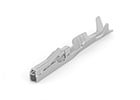
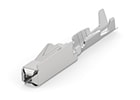
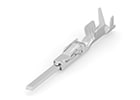
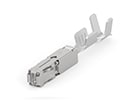
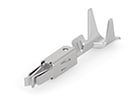
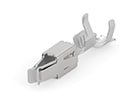
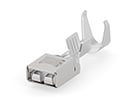
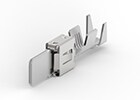
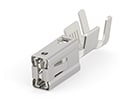
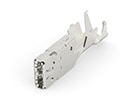
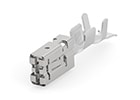
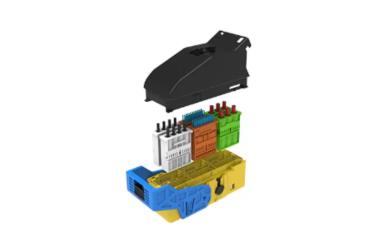
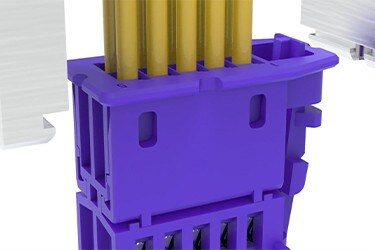
Automation-Ready (DIN 72036 Standard) Product Portfolio
Frequently Asked Questions
Q: What does “automation-ready” mean for automotive connectors?
A: Automation-ready connectors are designed to reliably support automated or semi-automated manufacturing processes. This includes features such as stable geometry for robotic gripping, optimized orientation for automated feeding and error free blockloading, and terminal designs that enable consistent insertion forces and crimping quality.
To achieve this, connector design, tolerances, and materials are aligned with recognized design guidelines for automated harness assembly, such as those described in DIN 72036. The use of automation ready components enables higher throughput, reduces manual handling, and improves production repeatability and overall process reliability.
Q: Why is automation becoming increasingly important in wiring harness production?
A: Wiring harnesses are among the most labor intensive assemblies in a vehicle, and their complexity continues to increase with the growth of vehicle electronics, ADAS, EV high voltage systems, and data connectivity. Automation helps manufacturers manage this rising complexity and volume by offsetting labor costs, improving quality, and stabilizing production—especially in the face of workforce shortages.
At the same time, it enables cost effective manufacturing closer to OEM locations, shortens supply chains, reduces CO₂ emissions, and supports sustainability goals. Automated processes also deliver faster response times to changes and higher, reproducible quality standards, which are essential for advanced functions such as autonomous driving.
Q: What connector features support higher levels of automation?
A: Connectivity components optimized for automation typically include the following features:
- Connector and contact designs that are precisely matched to enable reliable and repeatable blockloading (contact assembly).
- Standardized geometries that help to allow consistent robotic gripping throughout the entire manufacturing process.
- Reduction of separately mounted connector components to reduce handling steps.
- Terminal designs that support in process crimp quality monitoring.
Q: Are automation-ready connectors compatible with existing equipment?
A: Many automation-ready connectors are engineered to integrate with industry standard crimping, inserting, and testing platforms. TE and other suppliers often provide design guidelines, equipment recommendations, and digital models to support smooth deployment. However, compatibility may vary depending on the specific connector family and production workflow.
Q: Can automation be introduced gradually into harness manufacturing?
A: Yes. Most manufacturers introduce automation step-by-step, depending on production volume, complexity, and maturity.
Typical stages include:
- Automated cutting, stripping and crimping
- Automated terminal insertion and blockloading
- Automated routing
- Automated taping and application of fixing elements
- Fully automated harness manufacturing, combining steps 1-4
Using automation-ready connectors supports this phased approach and helps ensure scalability as companies move from semi-automated cells to higher levels of automation.
Q: Which applications are expected to be most relevant for automated wiring harnesses in the coming years?
A: Key applications include:
- Seats
- Bumpers
- Headlamps
- Roof systems
- Doors
- Center consoles
- Tailgates
Q: Are automation-ready connectors relevant for both ICE and electric vehicles?
A: Automation-ready connectors benefit any vehicle program by improving quality, consistency, and efficiency. They are increasingly relevant across body electronics, infotainment, lighting, chassis, and powertrain systems.
Q: How involved is TE in industry initiatives supporting automation, digitalization, and data-driven collaboration in the automotive value chain?
A: TE is part of the Catena-X Automotive Network. This is one of the leading initiatives driving digitalization of the entire automotive value chain in Germany. Harness suppliers increasingly adopt Catena X data spaces for future automated manufacturing data flows. Even though Catena-X does not automate production machinery, it enables automation and standardization by providing shared data infrastructure.
TE is engaged at ARENA2036, a future automotive production research campus in Germany. TE is actively involved in the Wire Harness Standardization Initiative (SILS), in which OEMs, assemblers, contact and connector manufacturers, machine builders, software providers and system houses work together to establish DIN 72036 standard.
Find more options
The Future of Automotive Innovation, Let’s Go There Together