Electromagnetic Compatibility
Electromagnetic Compatibility ensures that electronic devices operate without causing or suffering from electromagnetic interference.
What is Electromagnetic Compatibility? The definition of Electromagnetic Compatibility (EMC) is the measure of equipment’s capability to neither conduct electromagnetic energy nor radiate it. The equipment in turn should not be susceptible to any conducted or radiated emissions from any other source. The two most important characteristics of electromagnetic waves connected with interference are the amplitude and the frequency of the waves.
Design for EMC
Consider EMC early in the design process, from careful layout of PCB’s and components ensuring good signal integrity. Design with the accommodation of EMI gaskets for enclosure seams and covers, I/O connections, doors etc. Retrofit is expensive.
Interference Control
The three main ways in which interference factors can be controlled are:
- Using filtering techniques to filter out unwanted frequencies and thus prevent them from travelling along signal and input lines.
- Reduction of the waves amplitude by careful circuit design and component layout.
- Prevent radiation emission to or from the equipment by the use of suitable components and materials to give EMI screening
The first approach towards good design is to insert low pass LC filters into the input and output lines to the equipment. The filters will divert any emanating interference along the lines to earth.
The next concern is to design the various sections of the equipment to ensure that sections capable of radiation are isolated from each other by the use of careful PCB layout and the use of metal screens wherever required.
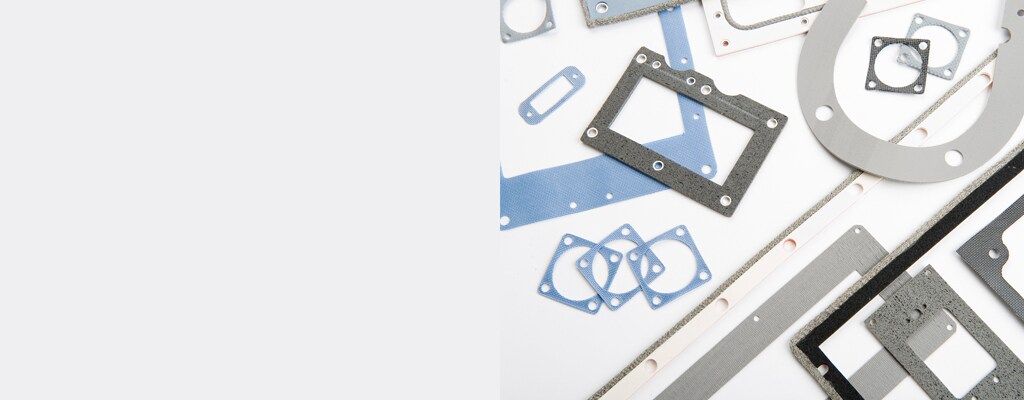
The equipment will then need to be shielded to prevent the ingress or egress of electromagnetic radiation. This is done by the use of suitable conductive gaskets.
EMI Shielding
The EMI shielding of any enclosure involves all of the internal and external openings and components.
The openings consist of covers, panels, doors. The components are panel meters, displays, indicator lights, connectors, switches, potentiometers, etc.
The success of EMI shielding an enclosure depends upon the correct selection and application of the screening materials available.
To this end TE Connectivity are in a position to advise you on the correct materials related to your problem.
Electrical
The electrical requirements are covered by measurements made to ascertain the level of attenuation required to fulfil the figures laiddown in the appropriate specification over a specified frequency band. The data given in the catalogue outlines the typical attenuation versus frequency of the various materials when correctly fitted. These figures are corroborated by independent tests.
Effective Shielding
Several reasons exist to create effective shielding of equipment. Among the more important benefits are:
- To minimise radiation and thereby prevent interference with other sensitive areas or equipments.
- To reduce any radiation to a level this will make it safe for life for example, microwave ovens.
- To prevent unwanted reflections inside equipment which could cause it to malfunction.
- To ensure electrical and mechanical compatibility with the metal enclosure.
- To meet local and international EMC legislation
Mechanical
The mechanical considerations are of the utmost importance in the fitment of shielded gaskets.
The design of an EMI shielded enclosure should be undertaken as if the gasketing will be required. If it is determined at a later stage that a particular gasket is not required it is easy to leave this out. If no provision for the gasket is made and then later required the modification to implement a gasket can be time consuming and costly.
The most effective shielding is provided when a continuous metal to metal contact is achieved. The metal surfaces of any enclosure flange are never 100% flat unless machined to very high tolerances. The function of the gasket is to take up any differences which may exist between the surfaces. The type of gasket material and thickness is thus selected according to the tolerances with which the enclosure or panel is fabricated.
To ensure metal to metal contact the design should incorporate, wherever possible, a means to prevent the over compression of the gasket and thus ensure evenness of pressure.
It is very important when fitting conductive gaskets that all contact surfaces be free from contamination and be highly conductive. The surfaces must therefore be free of paint, greases etc. and thoroughly cleaned prior to fitment of the gasket.
Chemical
Two dissimilar metals in the presence of an electrolyte e.g. sea water. will act as a battery and create a flow of electric current. This effect can cause corrosion and could affect the resistivity of the gasket material reducing its efficiency. In order to minimise or prevent galvanic action it is important to select compatible metals.
Environmental
Often equipment will need to operate in conditions where the ingress of moisture would be hazardous to the correct functioning of the system. To prevent this, an extra non conductive gasket acting as an environmental seal can be incorporated into the design of the enclosure.
A more practical solution is to use an EMI shielded gasket which incorporates an environmental seal. There are a variety of types available.