Application
Role of Wireless Protocols in Industrial Sensor Design
Selecting the right protocol early in the design process ensures that battery life, deployment flexibility, and maintenance workflows align with the application’s real world demands.
Wireless range, power consumption, data rate, and regulatory limits define what industrial wireless sensors can realistically achieve in the field. Because BLE and LoRaWAN differ sharply across these parameters, protocol selection becomes an early architectural decision. The choice determines battery life, deployment flexibility, maintenance workflows, and compliance obligations across all sensor types.
Bluetooth Low Energy
BLE (Bluetooth Low Energy) provides shortrange connectivity with very low energy use, making it well suited for battery-powered sensors that require local interaction or periodic data offload.
- Range: Typically 10–40 meters indoors, with longer distances possible in favorable conditions or when using the Coded PHY.
- Power consumption: Transmit currents in the 1 - 15 mA range with deep sleep operation between bursts. Optimized for brief, interactive exchanges.
- Battery life: Months to years depending on advertising interval or in connected paired mode, reporting frequency, and battery capacity.
- Data rate: Up to 1-2 Mbps for configuration and diagnostics. BLE also supports a Coded PHY mode, which reduces effective throughput but significantly improves range and robustness by applying forward error correction and symbol spreading. This makes BLE more reliable in obstructed or metal-dense industrial environments.
BLE combines moderate data rates, low energy use, and predictable short-range performance, making it a strong fit for local monitoring, commissioning, and technician-driven interaction in dense industrial environments.
Coded PHY
What Coded PHY Means for Industrial Sensors
BLE’s Coded PHY mode extends short range connectivity by applying forward error correction and symbol spreading to improve receiver sensitivity. Although it reduces effective data rate, Coded PHY significantly increases link robustness in metal dense mechanical rooms, rooftop units, and partially shielded enclosures. For both BLE only and LoRaWAN with BLE devices, Coded PHY ensures technicians can reliably connect to sensors during commissioning and diagnostics, even when RF conditions are challenging.
LoRaWAN + Integrated BLE
LoRaWAN is optimized for long range, low duty cycle communication in distributed environments where sensors may be separated by hundreds or thousands of meters. TE Connectivity’s LoRaWAN enabled sensors also integrate BLE as a built in short range interface, allowing technicians to perform configuration, diagnostics, and firmware updates on site while LoRaWAN handles remote telemetry.
- Range: Commonly 1–5 km in semi-urban or industrial settings and up to 10–15 km in rural or open areas, depending on antenna design, gateway placement, and RF conditions.
- Power consumption: LoRaWAN transmit currents typically fall in the 20–40 mA range with microamp level deep sleep currents; infrequent transmissions keep total energy use extremely low. BLE is used only during brief technician interactions, minimizing its impact on battery life.
- Battery life: Multi-year operation is common, even on modest battery capacities, due to long sleep intervals and highly efficient duty cycle behavior. BLE activity has minimal impact because it is used only during local service events.
- Data rate: LoRaWAN supports very low data rates optimized for periodic telemetry. BLE provides 1-2 Mbps short range bandwidth for configuration, diagnostics, and firmware updates when a technician is physically present.
LoRaWAN delivers kilometer scale coverage with exceptionally low total energy use while integrated BLE provides convenient local access. This combination supports remote telemetry and on-site service workflows within a single device family.
Protocol Selection
The following table summarizes the key advantages, challenges and best fit use cases of the protocol families described above.
| Protocol | Key Advantages | Challenges | Best Fit |
|---|---|---|---|
| BLE |
|
|
|
| LoRaWAN (with BLE for Local Access) |
|
|
|
Regulatory Considerations
Regulatory requirements matter because they define the legal operating envelope for each wireless protocol, and those limits directly influence range, battery life, responsiveness, and global operational flexibility.
BLE operates in the globally harmonized 2.4 GHz band, where rules are uniform but strict. Power limits, spurious-emission controls, and coexistence requirements (such as adaptive frequency hopping) constrain range but support predictable, low power, short range performance.
LoRaWAN operates in region specific sub GHz ISM bands. Duty cycle limits, channel plans, and emission masks vary by geography, enabling long range, low power telemetry but restricting throughput and requiring region specific firmware and certification.
LoRaWAN devices that incorporate BLE must satisfy both sub-GHz LoRaWAN requirements and 2.4 GHz BLE rules. This increases certification complexity but enables both long-range reporting and short-range commissioning within a single device.
Regulatory constraints are not administrative overhead. They shape what a device can do in practice. BLE’s global uniformity simplifies deployment and supports interactive use cases. LoRaWAN’s regional variability requires more upfront planning but unlocks long range, ultra low power applications. LoRaWAN devices with BLE offer flexibility but require careful attention to dual band compliance and SKU management. For early architecture decisions, regulatory requirements often determine which protocol families are viable.
Applications
Predicting how protocol constraints will behave in real deployments can be challenging. The examples below illustrate their performance in representative industrial scenarios and highlight the specific conditions that make each option effective.
Commissioning and Diagnostics
Packaged Equipment
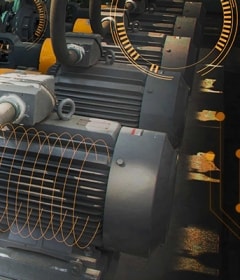
BLE is particularly effective for sensors embedded in packaged equipment such as rooftop HVAC units, pump skids, air-handling systems, and similar assets that are routinely installed, configured, and serviced on site. During commissioning, technicians typically stand within a few meters of the equipment, making BLE’s 10-40 m indoor range a natural fit for interaction. The moderate throughput of the protocol enables configuration transfers, calibration routines, and diagnostic log retrieval without requiring long-range communication. Because transmit currents remain in the 1-15 mA range and deep sleep modes are used between exchanges, the sensor can remain dormant for months until a technician initiates a session. This behavior aligns well with packaged equipment, where sensors must support occasional high-bandwidth communications but spend most of their life in low-power monitoring states.
BLE’s globally harmonized 2.4 GHz band also simplifies deployment for OEMs shipping equipment across multiple regions. A single SKU can support commissioning and diagnostics worldwide without region-specific firmware or certification variants. In dense mechanical rooms or equipment clusters, BLE’s predictable short-range performance reduces interference risk and confirms technicians can reliably connect to the correct device. These characteristics make BLE a strong match for equipment-centered workflows where human interaction, short data bursts, and predictable access patterns dominate.


Remote Pressure Monitoring
Distributed Water Systems
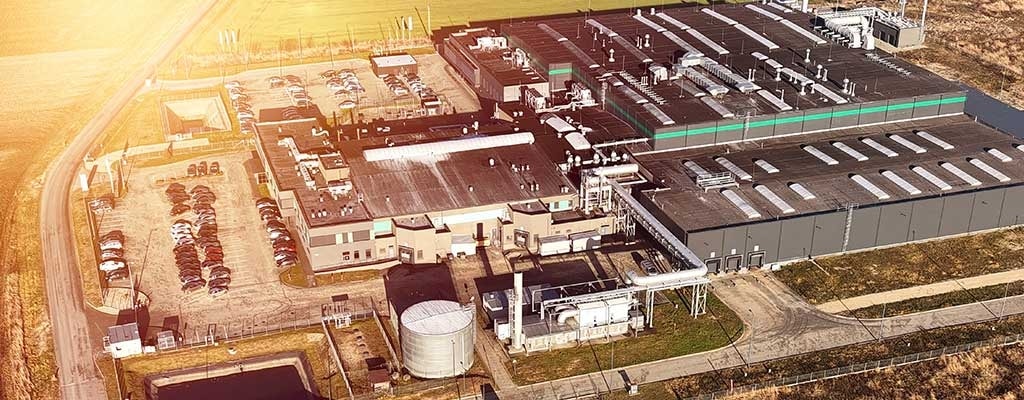
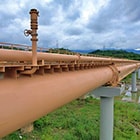
LoRaWAN is well suited for pressure sensors deployed across municipal or industrial water distribution networks, where equipment is widely dispersed and often difficult to access. Sensors installed in underground vaults, remote pump stations, or along pipelines typically integrate small payloads (pressure readings, temperature values, or fault indicators) at intervals ranging from minutes to hours. These telemetry patterns align directly with LoRaWAN’s low data rates and ultra-low duty cycle, enabling multi-year operation even on modest battery capacities. Because field maintenance is costly and sometimes hazardous, the ability to operate for years without intervention is a defining advantage.
The protocol’s long-range performance in sub-GHz frequency bands is equally important. In semi-urban environments, LoRaWAN routinely achieves 1-5 km of coverage, allowing a single gateway to service dozens of distributed components. Sub GHz signals penetrate soil, vault lids, and concrete more effectively than 2.4 GHz alternatives, improving reliability in buried or partially shielded installations. Region specific ISM rules are manageable because utilities typically deploy within a fixed geography, reducing the burden of maintaining multiple firmware variants. For distributed water systems, LoRaWAN’s combination of kilometer scale range, extremely low energy use, and tolerance for infrequent, small payloads makes it the most practical choice.



Vibration Mounting
Remote Industrial Motors
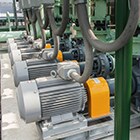
LoRaWAN devices with integrated BLE architectures are particularly effective for vibration sensors mounted on remote pumps, blowers, and rotating machinery that require both continuous condition monitoring and periodic on site diagnostics. LoRaWAN provides the long range, low rate telemetry needed for routine reporting (RMS vibration levels, temperature, fault flags) while maintaining multi-year battery life through ultra low duty cycle operation.
However, vibration analysis often requires high bandwidth interactions during maintenance visits. Technicians may need to retrieve waveform data, run calibration routines, or apply firmware updates, tasks that exceed LoRaWAN’s data rate and duty cycle capabilities. BLE fills this gap by providing short range, high throughput connectivity only when a technician is physically present. The BLE radio remains dormant until activated locally, preserving battery life while enabling rich diagnostic workflows.
This dual mode behavior allows a single device to support both remote monitoring and local service operations without requiring separate hardware.



Operating Environments
Operating environments also influence protocol suitability, particularly industrial settings where temperature extremes, metal enclosures, and electromagnetic noise can affect link reliability. Sensors deployed in harsh or hazardous locations must account for both RF behavior and safety classification requirements. As noted in the HazLoc Classification Guide, hazardous locations are areas where flammable gases, vapors, or combustible dusts may create explosion risks and equipment must be selected in accordance with the appropriate Class, Division or Zone designation. BLE performs well in controlled indoor spaces and dense equipment rooms, while LoRaWAN’s low frequency operation range is advantageous in outdoor, remote or partially shielded environments. LoRaWAN devices that include BLE offer flexibility across mixed range sites but must be certified for the most demanding environment in which they operate.

Summary
BLE supports technician driven workflows and dense equipment environments, while LoRaWAN enables long range, ultra low power telemetry across wide areas. TE’s LoRaWAN devices incorporate BLE for local access, combining remote reporting with convenient on-site interaction. Because range, power consumption, data rate, and regulatory limits define the operating envelope for every device, selecting the right protocol early in the design process can ensure that battery life, deployment flexibility, and maintenance workflows align with the application’s real world demands.