From Safety to Autonomy: Data Connectivity is the Driver
By Davy Brown
VP and CTO
Transportation Solutions
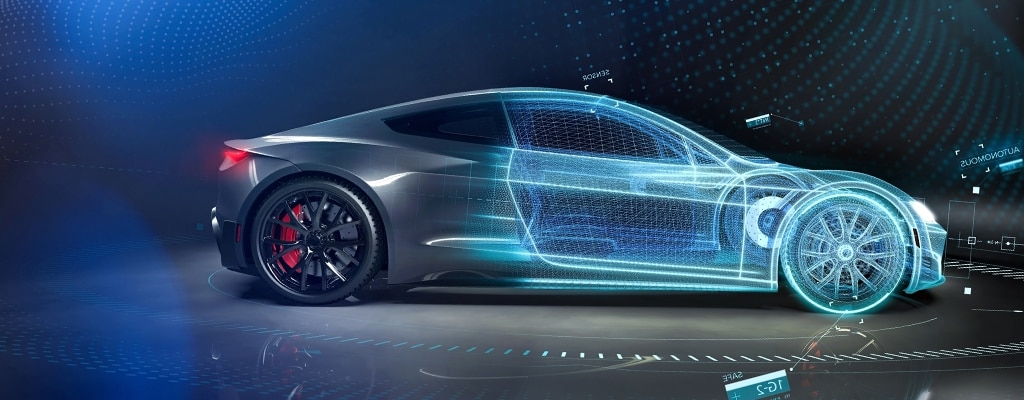
Vehicle technology is maturing rapidly, and the prospect of self-driving cars often dominates headlines. But there’s a quieter story happening day by day: data connectivity, which will make autonomous cars a reality, is already making it much safer to operate a vehicle, both on-highway and off.
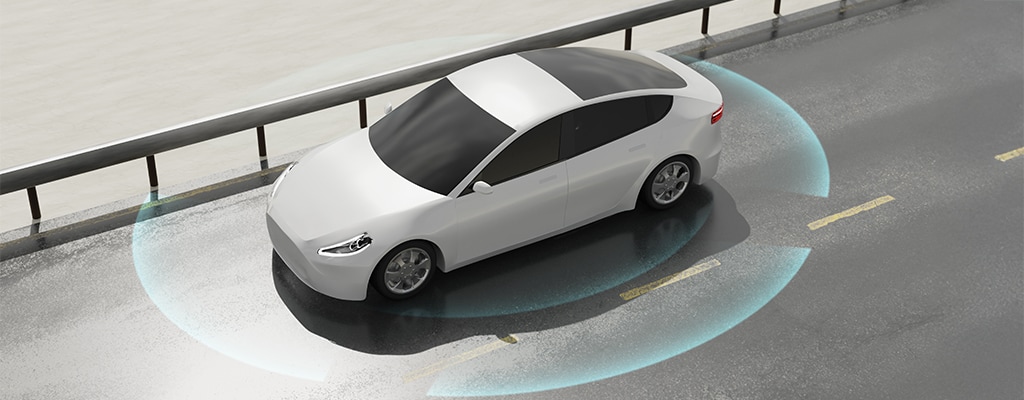
The key to safer operations lies in our ability to collect large quantities of high-quality data via a growing array of sensors, interpret that data quickly and accurately, and distribute that information throughout the vehicle, wherever it needs to go. Better sensing and more processing capabilities offer a better view of the environment around a vehicle. That information makes it easier for drivers to make decisions in real time, both human and computer.
Sensors plus high-speed connectivity plus compute power equal safer operation
The shift toward autonomous vehicles is happening more rapidly in off-highway applications than in passenger cars. In applications like mining or agriculture, the risk posed by other vehicles is very low and the utility of autonomy is high: The additional sensors in off-highway, heavy equipment can certainly see more than a single human operator — and without any risks caused by other vehicles sharing the same space.
As vehicle data networks have evolved to move all that sensor data throughout the vehicle and AI-powered components are better able to interpret and act on that data, the environment has become so safe that human operators sometimes represent an increased risk. In the harshest mining environments, for example, it could be safer to operate a vehicle autonomously than to expose a human operator to those conditions.
In the more complicated and riskier environment of a heavily trafficked highway, fully autonomous operations are farther away. But drivers and passengers alike are still reaping the benefits of better sensor technology, the ability to move more data throughout the vehicle more quickly, and the ability to monitor and act on that information. Even if people still need to drive them, improvements such as lane-keeping, automatic braking and adaptive cruise control are making cars safer and more comfortable to operate.
Vehicle design is changing to accommodate faster data
The array of sensors and volume of data that enable semi-autonomous safety features require vehicles that can distribute and process information in real-time. Fortunately, handling high volumes of data more quickly isn’t a new problem, and manufacturers have adapted by introducing more complex network topologies derived from other applications such as data centers and manufacturing.
The relatively simple, centralized controller area network (CAN) standard has increasingly been supplanted by zonal architectures that allow automakers to distribute functionality throughout the vehicle. This approach allows high-speed data to pass directly between zones, sensors, actuators and high-capability compute units.
Moving data through a vehicle’s architecture requires components that can withstand heat, vibration, moisture and electromagnetic interference. Automakers also work within tight design constraints in terms of size, weight and cost, which means that component makers are stepping up with products that meet durability and reliability specifications in in form factors that make them easy to assemble. TE has solved for space constraints for data connectivity solutions in two ways:
- Shrinking the component, like the MATE-AX miniature coax connector system, which, though smaller, still enables 9 GHz RF performance
- Combining components into a single hybrid solution, like the NET-AX+ modular hybrid data connector, which supports coaxial data connectivity as well as signal and power connections in a single assembly
 e
e
 e
e
 e
e
Moving and processing more data is changing the driving experience
Beyond making vehicles safer and more autonomous, data is also improving the experience of owning and operating a vehicle in other ways. For example, maintenance standards are changing, especially in electric vehicles where frequent service visits for things like oil changes aren’t necessary.
Instead, remote diagnostics will alert drivers and operators of issues before they result in unwanted downtime, which will also eliminate the inconvenience of scheduling routine maintenance. In other words, maintenance is becoming predictive and preventative rather than periodic and routine.
As more of a vehicle’s systems become controlled by software, over-the-air updates to vehicle platforms will support improved comfort and convenience for drivers and passengers. Smartphone control of vehicle systems and voice commands are changing the way drivers and passengers interact with their vehicles. Infotainment systems capable of higher-resolution audio delivered through more speakers are also enhancing the experience of driving or riding in the car.
New, data-centric architectures will continue to open up new ways for automakers to improve the driving experience.
Increased safety will continue to pave the road toward autonomy
Manufacturers continue to push the envelope as they pursue increased speed and reliability of data transmission that can further improve vehicle safety and unlock new capabilities. With the recent changes to network structures within cars and the proliferation of high-quality sensors, additional features are arriving more quickly with each revision of a given vehicle’s design.
While software becomes more sophisticated and capabilities multiply, the underpinning of a network topology with network nodes is unlikely to change further. Instead, the path forward involves increasing the capability of those nodes and bringing more compute power to bear on the increasing amount of data these vehicles will need to crunch.
For example, vehicle-to-everything (V2X) capabilities, which allow for interactions between vehicles and other connected devices, are relatively nascent today. That could change as the ability to supply them with the data they need to be effective is becoming a reality. Applications like real-time fleet optimization (managing the operation of a number of vehicles to improve route efficiency, fuel usage, delivery times, etc.) could accelerate in this environment. Software-defined and continually updated vehicles are also on the market and poised to increase in number.
At the same time, the quest for improved safety will continue. In the near term, features that monitor operator alertness by measuring blink rates or changes in steering, acceleration or braking could help keep more eyes — and vehicles — safely on the road, farm, mine, or job site. Eventually, this new age of vehicle connectivity will bring about enough safety features that input from human drivers becomes unnecessary — and autonomous vehicles become a widely and quietly accepted reality.
About the Author

Davy Brown
Davy Brown is vice president and chief technology officer for TE’s Transportation Solutions segment. In this role, he is responsible for the strategic direction of global engineering and product research and innovation within the Automotive, Industrial & Commercial Transportation and Sensors business units. Throughout his career, Davy has held senior technology leadership and executive roles in various technology companies spanning the semiconductor, software, consumer electronics, and telecommunications industries.