View products below to see detailed pricing
-
Product Listing
Polyimide / Acrylic Surface RTD Sensor | 321M Series
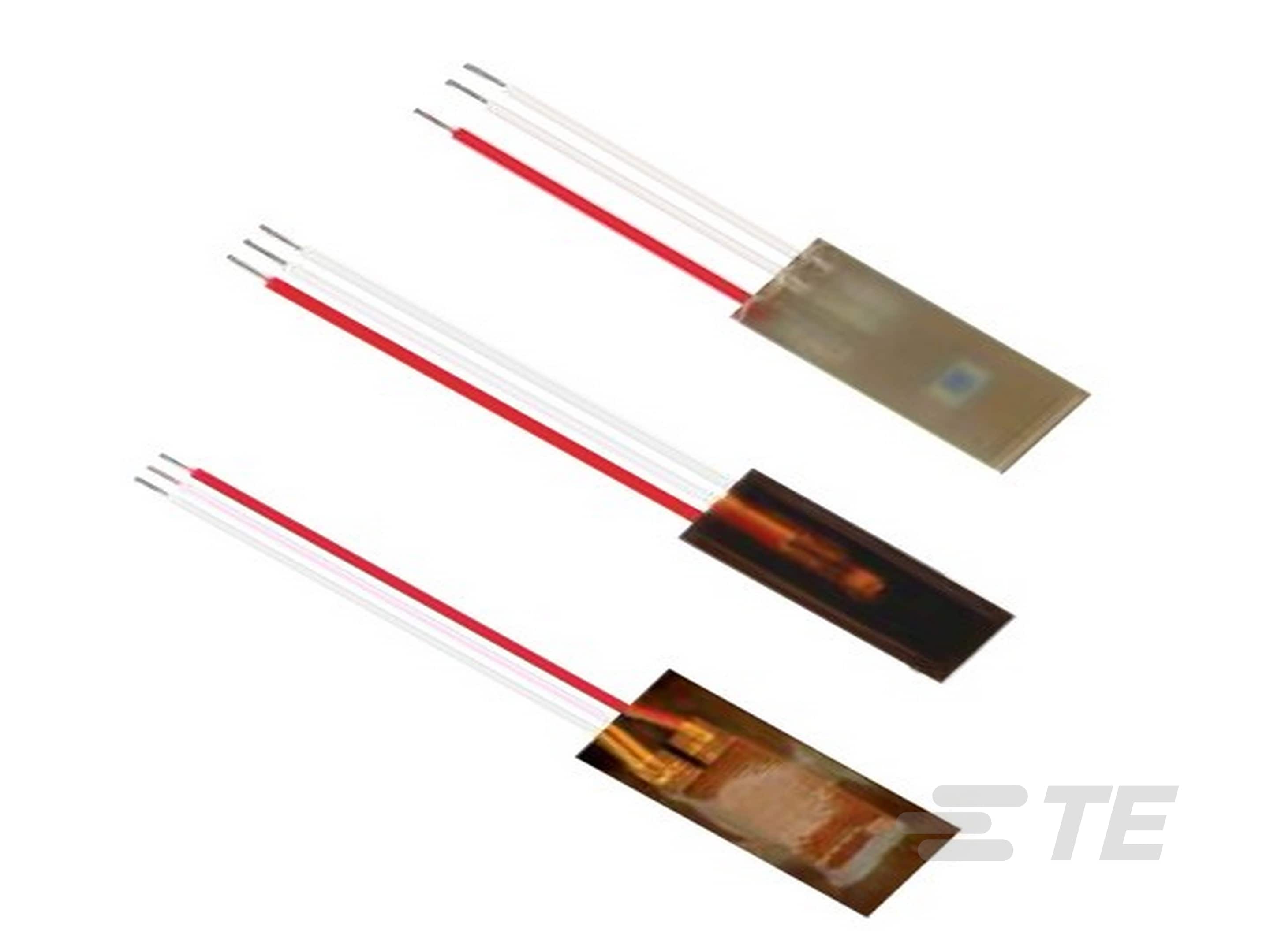
- MEAS
- MEAS 321M
The Polyimide surface RTD sensor is a flat, flexible, rectangular sensor with a sensing element laminated in Polyimide. They are used to monitor or measure temperature on round or uneven surfaces. For motor and generator applications, they are commonly used in the end turns of the windings.
Product Features
-
RTD Sensor Type : Acrylic Laminate | Polyimide Laminate
-
Element Type : Plotted Wire
-
Element Material : Platinum
-
Lead Wire Style : PTFE Insulated
-
Operating Temperature (Max) : 155 °C [ 311 °F ]

Overview
These polyimide surface RTD sensors are used to monitor or measure temperature on round or uneven surfaces. For motor and generator applications, they are commonly used in the end turns of the windings..
Applications
- Electric motors
- Generators
- HVAC
- Aerospace
Features
- Temperature range: -50°C (-58°F) to 200°C (392°F)
- Elements: Platinum, Copper, Nickel
- Style: Plotted, Wire Wound, Thin Film
- Optional adhesive backing
- Leadwire/cable options
- Fast response
- Noninvasive, simple installation
- Custom dimensions

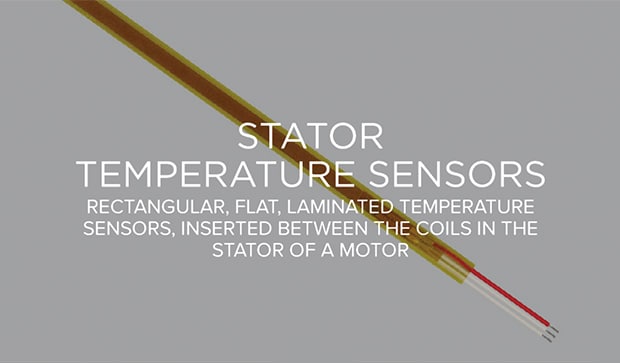
TE Connectivity's (TE) stator temperature sensors provide high stability for various applications including large motors.
Features
Please review product documents or contact us for the latest agency approval information.
Product Type Features
-
Connection Head Type None
-
Resistance Tolerance @ Reference Temperature 100 Ohm ±.12% at 0°C | 100 Ohm ±.5% at 0°C
-
RTD Sensor Type Acrylic Laminate | Polyimide Laminate
-
Element Type Plotted Wire
-
Element Material Platinum
-
Lead Wire Style PTFE Insulated
Configuration Features
-
Lead Wire Configuration 2 Wire Single (Red / White) | 3 Wire Single (Red / White / White) | 4 Wire Single (Red / Red / White / White)
Mechanical Attachment
-
Sensor Mount Type PSA Backing
Dimensions
-
Body Length 31.75 mm [ 1.25 in ]
-
Lead Wire Length (mm) 914.4 | 1524 | 1828.8 | 2438.4
-
Lead Wire Length (in) 36 | 60 | 72 | 96
-
Wire Size (AWG) 26
-
Body Thickness 1.39 mm [ .055 in ]
-
Body Width 12.7 mm [ .5 in ]
Usage Conditions
-
Temperature Coefficient (Ω/°C) .00385 | .00392
-
Operating Temperature (Max) 155 °C [ 311 °F ]
Related Materials
Datasheets & Catalog Pages
- TESS-ANDO-DS0044 English