
Embracing AI-Assisted Work
Engineers say AI is changing the way they work – for the better.
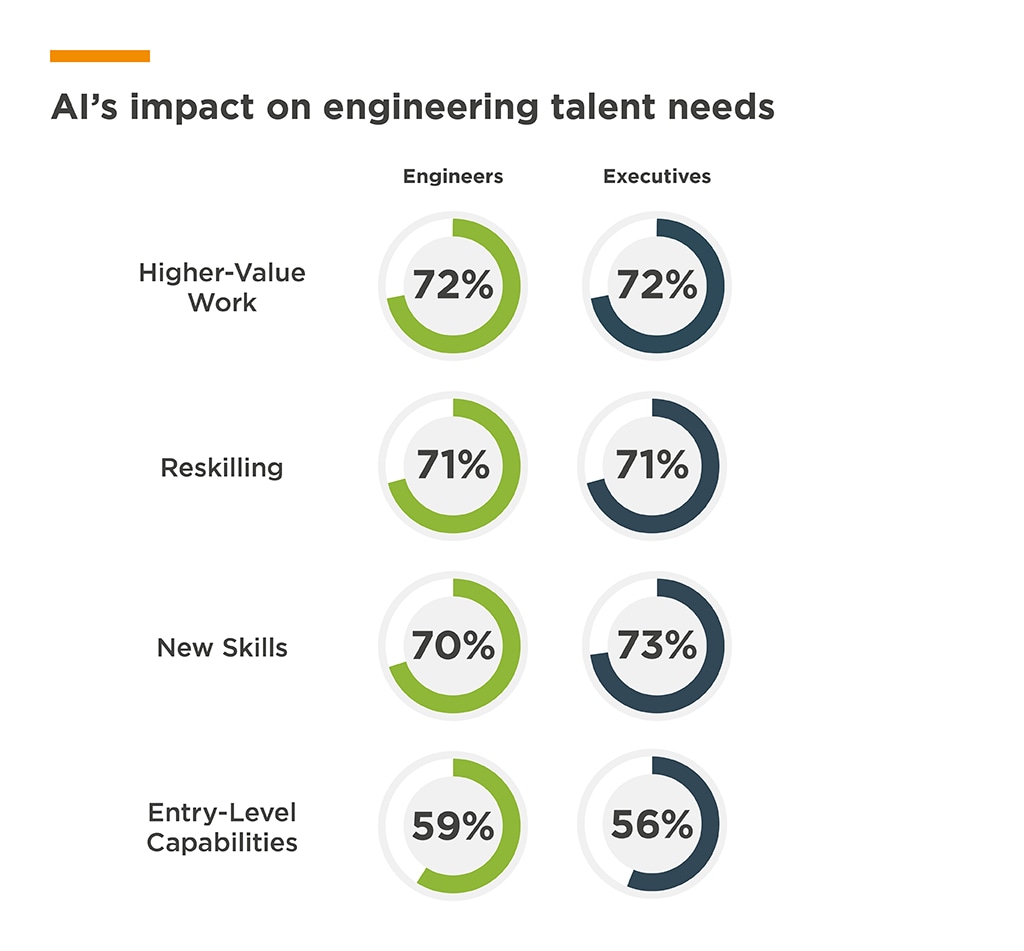
Engineers and executives agree that AI is transforming the traditional engineering role by reducing the need for entry-level skills and the number of engineers needed to complete certain tasks. Rather than eliminating jobs, however, AI is expanding opportunities: 66% of respondents say that AI is creating new roles and career paths at their companies. That trend is strongest in the data/cloud computing and automotive industries.
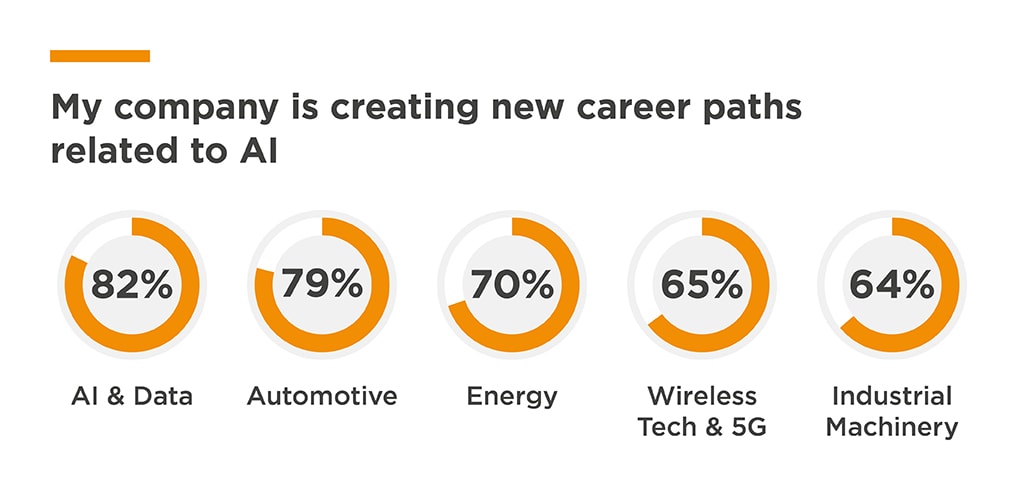
This transformation has had a positive impact, thanks in part to training and upskilling efforts. Nearly three-quarters of engineers (72%) say they have the technical skills needed to collaborate with AI effectively. Roughly half are using those skills in collaboration with AI to improve workflows, improve decision-making and identify data-driven insights. As a result, worries about job displacement have dissipated. Two-thirds of engineers (66%) say that rather than eliminating jobs, their organization is creating new roles and career paths related to AI integration.
To build on that momentum, organizations pursuing operational efficiencies and financial goals should continue the training and upskilling efforts that have driven their success to date.
TE Takeaway
AI has replaced a lot of the time I used to spend hunting for information across multiple systems, outdated files, and scattered threads. With TE’s internal AI tool, I can quickly find the right technical documents, standards, and policies, and confirm the latest guidance without chasing down multiple people. That time savings lets me focus more on higher value engineering work, like design decisions, problem solving, and validating solutions instead of searching. It also helps me move faster from question to execution, with more confidence that I am working from the correct source.

Hiroshi Takeuchi
R&D/Product Development Engineer
Automotive